«Money brings honor, friends, conquests and realms» –John Milton
Published on December 21, 2013 by www.Global Research.ca
 The following article is part II of longer text pertaining to Hegemonic Currencies and Monetary Geopolitics entitled:
“Honey Traps”: The Strauss-Kahn Affair, A Stealthy Coup d’état at the IMF?
«Money brings honor, friends, conquests and realms»
The following article is part II of longer text pertaining to Hegemonic Currencies and Monetary Geopolitics entitled:
“Honey Traps”: The Strauss-Kahn Affair, A Stealthy Coup d’état at the IMF?
«Money brings honor, friends, conquests and realms» –John Milton
This study is incomprehensible unless one acknowledges that “the management of money is always and everywhere political [and that…] even in the esoteric realm of money, international relations still reflect, to some extent, the interests of powerful states” (Kirshner, 2003).
Along these lines, since Classical Antiquity, there has always been a strong connection between wealth and military power and therefore, in the most simple and direct way, between economics and national security. Not surprisingly, modern times are not so different. (Friedberg, 1991).
Therefore, the trends that rule the behavior of currencies are strikingly similar to those that govern the conduct of national states. They both seek dominance in highly hierarchical and dynamic systems where competition, conflict and confrontation are commonplace. They both gain and lose power and prestige at the expense of one another in zero-sum games (Cohen, 2003). Therefore, “the realpolitik balancing instinct would apply to currency politics as well as geopolitics” (Drezner, 2010).
The evident overlapping parallel implies that, paraphrasing Robert Mundell (1993), powerful States have powerful currencies. In fact, history provides many examples that demonstrate that “currency can enhance the power of the state that issues it” (Cohen, 2009). Thus, it would be mistaken to disregard that “Money Rules – now more than ever – but those rules serve political masters [so] students of money in general and political scientists most particularly must return to that basic starting point – money is politics”. (Kirshner, 2003).Indeed, “World history demonstrates that there is a close relationship between monetary systems and war and peace”(Lips, 2004).
Furthermore, since the dawn of human civilization, the issuance of currency has invariably carried heavy political connotations related to territorial considerations: “governments have been assumed to enjoy a natural right of monopoly control over the issue and management of money within their borders [and following a model akin to a]Westphalian model of monetary geography […whereby] each state was expected to maintain its own exclusive territorial currency” (Cohen, 2008).
Consequently, not unlike nations, currencies rise and fall too. “An examination of the long history of reserve currencies shows the tendency for one currency to dominate, with any change in status often reflecting a shift or rebalancing of economic and political power” (Lee, 2010). Accordingly, “currency internationalization does indeed impact directly on the power position of issuing states” (Cohen, 2009).
Hence, there seems to be a persistent symbiotic link between geopolitics and finance that represents an element which is considered by statesmen in order to properly assess national power. Indeed, it is known that nowadays Central Bankers and political leaders actively collect intelligence information on the behavior of currencies and periodically test their relative strength, in order to “adjust their strategies accordingly” (Stroupe, 2005).
However, hegemonies, both geopolitical and monetary, are not perpetual: “historical experience demonstrates the speed and pervasiveness of changes in national economic power; since hegemony is transitory, so must be any international monetary system that takes hegemony as its basis” (Eichengreen, 2003), which indicates that “the international monetary system has always rested and depended upon political foundations” (Kirshner, 2003).
The following graph, based on data from a study on the evolution of monetary hegemony (Dwyer & Lothian, 2002), shows the historic succession of dominant international currencies from the 5th century B.C. onwards. Not surprisingly, as can be clearly seen, currencies occupy a dominant position when the nation that mints them becomes a great power.
However, “since states are no longer able to exercise supreme control over the circulation and use of money within their own frontiers, they must instead do what they can to preserve or promote market share. As a result, the population of the monetary universe is becoming ever more stratified, assuming the appearance of a vast Currency Pyramid — narrow at the top, where the strongest monies dominate; and increasingly broad below, reflecting varying degrees of competitive inferiority” (Cohen, 2003).
At this point, it is important to emphasize that ‘reserve currency’ status is the highest position a currency can attain because it is “something which evolves over time through combination of international economic and political power and convenience to the greatest number of users rather than abruptly as the result of conscious decisions by a single country”(Eslake, 2009). Moreover, there are other evident advantages provided that “the issuers of currencies that are widely used by others as reserve assets […] can finance deficits simply by printing more of their own money” (Cohen, 2008). Therefore, there is a “link between the distribution of economic power and the allocation of reserve currencies” (Drezner, 2010). Hence, “the great bulk of reserves is held in the form of highly liquid assets denominated in one of the small handful of moneys at the peak of the Currency Pyramid” (Cohen, 2009).
A reserve currency is thus defined by three essential attributes:
a) It provides a store of value, i.e. “confidence that the currency will retain its value, so making it a safe place in which to invest official reserves or denominate contracts” (Dobbs, 2009). Confidence is critical because “economies operate on trust as a foundation” (Stroupe, 2006). Thus, “reserve assets serve as a store of value that can be used directly for intervention purposes or else can be more or less quickly converted into a usable intervention medium” (Cohen, 2009).
b) It is employed as a “medium of exchange that offers the ability to transact globally in the currency in an easy and low-cost way” (Dobbs, 2009). As such, “a reserve currency facilitates trade and finance by decreasing the number of bilateral exchange markets that need to be created, thus reducing transaction costs” (Carbaugh&Hendrik, 2009). Therefore, it provides a reference to set the bilateral exchange rate quotations (Oxford Analytica, 2008).
c) As a unit of account, it is “a widely held and recognized currency that can be used to denominate international contracts […and] to invoice contracts” (Dobbs, 2009) and it is the currency in which many commodities –including fossil fuels, strategic raw materials, precious metals– and financial instruments available in capital markets are priced and traded (Oxford Analytica, 2008).
The latter is particularly important because there is a strong link between finance and hydrocarbons market, due to the fact that
“black gold has other pseudo-monetary characteristics as an indispensable commodity that practically begs to be controlled. In an increasingly industrialized world, this fungible primary energy source is everywhere in demand [and, as result…] the spectrum of thought on national security and foreign policy [is taken] into the realm of high finance, capital flows and the trump asset of energy resources (Roby, 2010).
Hence, this research paper must be understood in the context of the United States dollar’s decades-long role as the ‘first among equals’ in the international monetary system. The following graph, based on data from a paper written by a prominent scholar of International Political Economy (Cohen, 2009) illustrates the current hierarchical pyramid of currencies, classified as “top currency”, “patrician currencies” and “elite currencies”.
In geopolitical terms, during the Cold War period, the Dollar hegemony “held the American alliance system and the world economy together… [because] America’s major allies and economic partners were willing to hold dollars for political as well as for economic reasons” (Engdahl, 2006). Therefore, the privileged position of the dollar has been “a key contributor to US global hegemony” (Oxford Analytica, 2008) for it provides advantages derived from the Federal Reserve’s absolute monopoly of the printing of a currency needed by countless national economies to survive (Engdahl, 2003).
Thus, thanks to of its wealth, “America has been able to irresistibly influence all the other players on the geopolitical chessboard because it has led the global economy, and historically it could therefore greatly reward or severely punish in ways and to an extent no one else could” (Stroupe, 2006), attaining both political and diplomatic power, as well as formidable power projection capabilities.
For this reason, “America’s dominant position as the sole superpower ultimately rests upon two pillars: its overwhelming military superiority and its control of the global economic system by the unique role of the dollar as the World Reserve Currency” (Clark, 2005). According to this reasoning,
“it might be considered an elemental interest of the United States to maintain the system which also includes intense diplomatic and limited military operations in order to preserve its abundant financing for as long as possible. After all, there seems to be a strong interdependence among nations. The US is dependent on cheap financing from abroad and is even willing to apply some military power to protect these interests” (Schulz, 2009).
Moreover, it cannot be denied that “the dollar’s leading role in foreign exchange transactions also is reinforced by this currency’s widespread use in the invoicing of international trade” (Goldberg, 2011). That is especially true about oil markets, given that “since oil trade was and still is noted, as well as traded in US Dollars, every nation has to purchase huge amounts of this currency for its national reserves in order to maintain its ability to purchase the required energy” (Schulz, 2009). Consequently, monetary dependence of others on the issuing country confers the latter significant geopolitical power(Cohen, 2003).
The unavoidable reasoning that arises is that “a full challenge to the domination of the US dollar as the world central-bank reserve currency entails a de facto declaration of war [on American power]” and, as a result, the United States is willing to fight wars to defend its national currency (Engdahl, 2006) because “an end to the dollar’s reserve currency status would impose material constraints on the United States to finance its deficits, and lead to a major loss of prestige and power projection capabilities” (Drezner, 2010). A possibility is that “widespread oil pricing in alternative currencies or perhaps the bartering of oil would then threaten U.S. hegemony by crimping the relative global demand for dollars” (Roby, 2010).
Nevertheless, perpetual hierarchic supremacy of the dollar cannot be taken for granted:
“Sooner or later, confidence in the dollar is bound to be undermined by America’s chronic payments deficits, which add persistently to the country’s looming foreign debt […] The exorbitant privilege obviously cannot endure forever; America’s spending cannot indefinitely exceed its income. In the absence of significant policy reforms to reverse the deficits, the world’s trust in the dollar is bound […] to be eroded. Dollar accumulations will eventually dry up and could even turn into massive sales” (Cohen, 2008).
The feasibility of said scenario has been enhanced by recent events. Indeed, “the [2008 and 2009] financial crisis and its aftermath have triggered uncertainty about the future of the dollar as the world’s reserve currency” (Drezner, 2010) because it “revealed the inherent weaknesses of the current international monetary system that contributed to global financial instability and a weak global economy and [said crisis has also] hampered the long-term prospects of both the US dollar and the euro as reserve currencies. The crisis has compromised both currencies as safe-haven stores of value” (Lee, 2010).
The following chart, based on official IMF data (International Monetary Fund, 2013) reflects the composition of foreign exchange reserves held on a global basis by early 2013. As can be seen, nowadays the US dollar still occupies a predominant position which is unmatched by other inhabitants of the world’s current monetary universe.
At first, “it appears that the current system of dollar dominance will persist provided that geopolitical tensions do not become too important for policymakers – or not important enough” (Drezner, 2010), yet appearances can deceiving and potential challengers might become increasingly assertive:
“several states around the world today are thought to harbor ambitions to amplify their monetary power – including, most prominently, the four BRIC countries (Brazil, Russia, India, and above all China). One way to do this is to promote internationalization of their currency” (Cohen, 2009) by “trying to establish their own financial regimes as the international payment vehicle” (Schulz, 2009).
It is telling that, back in 2008, Vice Admiral J. Michael McConnell, then Director of National Intelligence voiced before the United States Congress Intelligence Committee his “concerns about the financial capabilities of Russia, China, and OPEC countries and the potential use of their market access to exert financial leverage to achieve political ends” (McConnell, 2008). The senior American official’s threat assessment is not mistaken: “influence might be increased directly through the use of newly acquired reserve stockpiles to threaten manipulation of the value or stability of a key currency such as the dollar” (Cohen, 2008).
The Vice Admiral’s statement, which –needless to say– goes “beyond the conventional world of spycraft” (Shelton, 2008), implies that the US intelligence Nomenklatura has already acknowledged the threat posed by the geopolitical manipulation of financial forces by foreign powers hostile to American interests. It might be interpreted as the confirmation that “the United States may be expected to resist any compromise of the greenback’s historical dominance…” (Cohen, 2008).
Indeed, McConnell’s concern is not unsubstantiated at all, taking into account that “[the] US increasingly came to rely on the governments of countries that were neither democracies nor US allies for financing […and since such States] with large quantities of reserves have more strategic freedom of action; they are less likely to be deterred from taking geostrategic risks by the possibility that their actions could precipitate a financial crisis (Setser, 2009).
Actually, the unleashing of financial warfare seeks the infliction of economic damage as it “involves malicious acts in markets for stocks, bonds, currencies, commodities and derivatives” (Rickards, 2012). The same author points out that, unlike conventional warfare, it can be waged stealthily enough so as to obscure the identities of the attackers as well as their channels. Thus, it requires a remarkably high degree of sophistication.
The aforementioned has engendered, paralleling Cold War terminology, a system akin to a “balance of financial terror” (Summers, 2004) whereby America’s overall stability could potentially be threatened due to the fact that “America’s partners in NATO are no longer the dominant holders of US dollars in reserve as they were during the cold war. The connection between dollar holders and security partners has been severed [and, as a result,] the dollar depends on the kindness of strangers” (Drezner, 2010). At this point, it is vital to underscore that “[regarding monetary concerns] politics will mater greatly [because] States do not typically (accumulate claims on) countries that are, or may be, their geopolitical competitors –if they can help it, that is, or if there is any credible alternative” (Jaeger, 2010).
In the light of the above, based on data from the CIA World Factbook (Central Intelligence Agency, 2012) and the World Gold Council (2011), the following chart reveals the largest proprietors of financial assets, including foreign currency reserves, gold and holdings of SDR. The list includes industrial economies, emerging powers, world-class financial centers and oil exporters. Not many of them are staunch US allies, some might eventually reconsider their Foreign Policy vis-à-vis America and only one of them, namely Germany, is a NATO member, for the time being.
It must be borne in mind that “for historical reasons gold is still included in the reserve stockpiles of many countries, despite the fact that it is no longer directly employable as a means of exchange. So too are SDRs [and that both of them] must be exchanged for a more utilizable instrument when the need for financing arises” (Cohen, 2009). Indeed, given the fact that the aurous metal “has been used as money to a greater or lesser extent for much of the history of civilization” (Michaud, et al., 2006), it “fulfills the unique function of a global store of value” (Faugère& Van Erlach, 2005). Incidentally, even though the US is not among the top ten holders of financial assets, most the US currency reserves are not denominated in dollars (!) but in gold: Its 8,133.5 tons represent 76.6% of its national currency reserves (World Gold Council, 2011).
Even though this paper does not focus on the yellow metal, its significance in terms of monetary politics is deservedly acknowledged because “from the beginning of recorded history some 6,000 years ago, gold made a profound and lasting impression. Gold was, and still is, the ultimate symbol of wealth, power, beauty and prestige. It has been deeply rooted in the consciousness of man ever since” (Lips, 2001) and, as a result, “gold is a political metal” (Lips, 2004). As such, it is “highly susceptible to geopolitical factors [because…] during periods of fiscal or monetary mismanagement, crises of various kinds or fundamental changes in the dominant currency, gold may be a very useful asset for hedging risk” (Michaud, et al., 2006).
In other respects, dollar hegemony went unchallenged during six decades because no competitive rival emerged, yet “ample evidence exists to suggest that the distribution of power in international monetary affairs is changing” (Cohen, 2008). Especially, the rise of the People’s Republic of China as an economic superpower has enhanced the possibility that the ‘Middle Kingdom’ could become, in the long run, a financial superpower (Makin, 2011). Naturally, “many PRC scholars and policy makers […] aspire for a world economic and financial order less dominated by the US and in which the PRC can play a more influential role” (Lee, 2010).
Accordingly, by proposing alternatives to the US dollar as reserve currency –like Special Drawing Rights–, “China desires to decrease the financial and political power of the United States” (Carbaugh & Hendrik, 2009) and, it has to be taken into account that “If any nation is in a position to use its newly acquired influence in this manner, it is China. At any time, Beijing could undermine America’s money by dumping greenbacks on the world’s currency exchanges or even simply by declining to add dollars to China’s reserves in the future” (Cohen, 2008).
Both options are not mutually exclusive and they can be advanced simultaneously. Indeed, the People’s Bank of China could covertly and progressively diversify its massive currency reserves by ceasing to buy American dollars and, simultaneously, stockpiling growing reserves denominated in other currencies and even in precious metals. This deceptive strategy is meant to preserve wealth without precipitating a sudden dollar collapse, along with some political consequences such move would recklessly unleash. Therefore, it is not surprising that the composition of its foreign currency reserves is one of the highest state secrets of the People Republic of China (Stroupe, 2006).
Even if “China’s tactics suggest that it is not prepared to challenge the dollar’s hegemonic status at any point in the near future” (Drezner, 2010), it actually looks like, in the long term, Beijing is interested in forging a new monetary system in which the US dollar is no longer the only reserve currency available and overreliance on the American currency is not a necessary evil anymore. Chinese statesmen can accomplish such an ambitious objective through the application of two strategies: a) contributing to the strengthening of Special Drawing Rights (DSR)[1], in order to establish a multilateral reserve currency under which financial power will be, more or less, evenly distributed and b) unilaterally promoting the internationalization of the Renminbi as a growingly solid currency (Chin & Wang, 2010).
Interestingly, the international monetary diversification away from the dollar is enthusiastically welcomed by Russia (Drezner, 2010), an utmost resourceful challenger of American geopolitical interests which, as such, would be more than glad to witness the accelerated decline of the US as the international’s system top power.
If the economic rise of China is uninterrupted during the next few decades, there will be profound financial and, above all, geopolitical consequences: “If the yuan emerges as a reserve currency potentially rivaling the dollar, China will become more powerful and the US less powerful in international and financial affairs… [In that sense,] the emergence of the yuan as a major reserve currency will reflect the underlying shift in economic and financial power, even if it does, independently, provide tangible benefits to China [but] this is likely to have ramifications for Washington’s political position in the world” (Jaeger, 2010).
Reportedly, while discussing if accumulating mammoth currency reserves denominated in American currency benefits China’s national interests, Beijing’s ruling elite has questioned the long-term strength of the US dollar a solid store of value and, in order to encourage the introduction of a new international monetary system under a new global reserve currency and, thus, senior Chinese government officials have implemented. “measures to promote the internationalization of the renminbi [also known as ‘people’s currency’ or yuan]” (Drezner, 2010).
Nowadays, it appears likely that
“the yuan is set to become a major reserve currency, but it is not a foregone conclusion that it will emerge as the dominant reserve currency 20, 30 or even 40 years from now. For, despite heated theoretical debate, it is possible for two or even three major reserve currencies to co-exist” (Jaeger, 2010).
Even if it is still unclear who will inherit the dollar’s position as hegemonic currency due to a lack of credible alternative successors, the assumption that an eventual monetary transition, far from being unfeasible, is a real possibility, considering that “several currencies can share reserve currency status, as they not infrequently have. Changes in financial technologies and market structures […] make it even more likely that this will be true in the future than the past” (Eichengreen, 2005). Likewise, “a multi-currency reserve system provides alternatives for countries to diversify their foreign exchange currency holdings. If dollar liabilities increase and confidence declines, for example, central banks can switch to the other reserve currencies” (Lee, 2010).
Accordingly, it is way too early to accurately forecast what the international monetary system will look like during the next few decades. It is also unknown if the much-anticipated shift will be accomplished through peaceful or violent means. In the absence of consolidated challengers, it appears likely that some sort of ‘multipolar balance of monetary power’ will emerge, i.e. “[a] fragmented currency system, with no dominant leader… [akin to the] interregnum of the period between the two World Wars, when Britain’s pound sterling was in decline and the dollar on the rise, but neither was dominant” (Cohen, 2008).
Whatever the ultimate result, it must always be kept in mind that a power vacuum is not meant to last neither in geopolitics nor in finance. Along these lines, some analysts foresee that “the dollar’s global dominance is more likely to be lost incrementally to a number of other currencies as those currencies continue to rise in international importance, that is, as they come to be used more frequently in international transactions” (Stroupe, 2006).
If the US dollar does lose its royal crown, it will not be immediately grabbed by another national currency. There are alternative possibilities that deserve special attention, such as Special Drawing Rights (SDR), which were “created by the International Monetary Fund (IMF) in 1969 to support the Bretton Woods system of fixed exchange rates. The IMF’s objective was to introduce into the payments mechanism a new type of international money, in addition to the dollar and gold, that could be transferred among participating nations in settlement of payments deficits Although the SDR was designed as a reserve currency, it never took off. SDRs today add up to less than 1 percent of total reserves. The SDR has only limited use as a reserve asset, and its main purpose is to serve as the unit of account of the IMF and some other international organizations. Rather than being an international currency, the SDR is a potential claim on the freely usable currencies of IMF members” (Carbaugh&Hendrik, 2009).
Nonetheless, it must be pointed out that “The SDR is not a hard currency but rather a derivative as its value is determined based on the value of other assets […] more importantly, the SDR is tied to all the world’s economies unlike existing currencies which are components of either a single country’s economy or a pool of countries like the euro” (Rosensweig, 2009). In other words, SDR is regarded as the “Esperanto of currency options” (Drezner, 2010).
The aforementioned plurality is due to the fact that “the value of the SDR is defined as a basket of currencies which include the U.S. dollar, Japanese yen, UK pound, and the euro. The SDR’s basket composition is reviewed every five years to ensure that it reflects the relative importance of currencies in the world’s trading and financial systems. the economic welfare of the world would not depend on the behavior of a single currency, namely the dollar. Currency risk would be diversified through a basket reserve unit. It would take years to develop SDR money markets that are liquid enough to serve as a reserve asset. Although the IMF approved the first issuance of SDR-denominated bonds on July 1, 2009, as it attempts to increase its resources, the bonds can be purchased and sold only by central banks, not private investors” (Carbaugh & Hendrik, 2009).
On the other hand, it is outstanding that, only until relatively recent times, have military strategists acknowledged the full destructive potential of financial warfare as a geopolitical weapon of the highest caliber, yet if offers the advantage of avoiding much bloodshed, unlike the use of conventional armament or Weapons of Mass Destruction –WMD–. Indeed, according to Chinese military experts, wars can be waged through the manipulation of financial instruments to demolish countries’ national economies. In that sense, the consequences of financial attacks are usually devastating because they precipitate “a near collapse of the social and political order.
“The casualties resulting from the constant chaos are no less than those resulting from a regional war, and the injury done to the living social organism even exceeds the injury inflicted by a regional war [and an additional advantage is that]… financial war […] allows for concealed actions…” (Quiao & Wang, 1999).
In that sense, it has been argued that dollar hegemony was somehow involved with the Anglo-American decision to invade Iraq back in 2003, not long after the Middle Eastern country had switched to the euro in its oil exports. Once Saddam Hussein’s regime was overthrown, the occupation forces “quickly reconverted Iraq’s oil transaction currency to the dollar” (Clark, 2005). That would explain the staunch Franco-German reluctance to participate in and back Operation Iraqi Freedom.
Libya offers another intriguing case worth looking into. Libyan satrap Muammar Gaddafi was reportedly planning to sponsor the introduction of a gold currency shared by African and Arab nations (Scott, 2011). Revealingly, French President Sarkozy even declared that, “Libya has begun to change their views towards financial security of mankind” (Gold Investment, 2011). Furthermore, during an ensuing bloody insurrection, Western-backed rebels fighting to unseat Gaddafi established their own central bank even before the Libyan dictator was finally deposed and a new government could be created, which illustrates that “there were some pretty sophisticated influences [involved and that it also shows] how extraordinarily powerful central bankers have become in our era” (Brown, 2011).
Finally, “the absence of geopolitical tensions could boost the chances of coordinated shift in currency reserves” (Drezner, 2010), but it definitely cannot be discarded that “the outcome could be heightened struggle for leadership over the longer term and a rising tension in international currency affairs” (Chin & Wang, 2010). Indeed, it seems that the first shots of this very unconventional war may have even been fired already, indicating that, apparently, “a battle of currencies [far from being peaceful] could get nasty” (Cohen, 2008).
Indeed, “there are many other historic examples of the US stepping in to halt a movement away from the petrodollar system, often in covert ways” (Katusha, 2012) and the case of Dominique Strauss-Kahn may offer one of such examples. The author of this paper shares said perception and believes that, as will be explained below, DSK apparently may have been one of its (political) casualties.
Intergovernmental Institutions as Battleground Arenas
«Money is a good soldier, sir…» –William Shakespeare
It is mistaken to disassociate international institutions from the contextual balance of power that prevails at any given time. Far from being autonomous players, they “are created by the more powerful states, and [they] survive in their original form as long as they serve the major interests of their creators, or are thought to do so [and] institutions remain close to the underlying distribution of national capabilities or [else] they court failure” (Waltz, 2000).
From the moment of their inception, intergovernmental institutions are inescapably permeated by national interests due to the fact that “States sometimes operate through institutions. The most powerful in the system create and shape institutions so that they can maintain their share of world power, or even increase it” (Mearsheimer, 1994). As a result, institutions are not politically neutral. Instead, they “reflect state calculations of self-interest based primarily on concerns about relative power” (Mearsheimer, 1995). So, it is not surprising at all that powerful States struggle to control, either directly or indirectly, those same institutions.
For instance, the Organization of American States (OAS) is clearly dominated by the USA as the Shanghai Cooperation Organization (SCO) is undeniably dominated by both the People’s Republic of China and the Russian Federation. Likewise, “since the founding of the Bretton Woods institutions in 1945, the World Bank has been headed by an American whereas the FMI has been under the helm of a (Western) European” (Chossudovsky, 2011). Such control indicates that, when both institutions were created, the US and Western Europe wanted to forge a comprehensive transatlantic alliance which could encompass economic and financial affairs. There was also, of course, a military counterpart: The North Atlantic Treaty Organization (NATO).
The following lists, based on official data published by both the International Monetary Fund (2012) and the World Bank (2012), illustrate that the former has always been ran by a European whereas the latter has invariably presided over by an American.
In that sense, international financial institutions –like the IMF– are certainly no exception because “the most basic choices about money – what money is used where, the behaviour of international financial institutions, and efforts at cooperation – can only be understood as the outcome of a political contest between states with motivations other than the pursuit of global economic efficiency” (Kirshner, 2003).
History has shown that, from the very beginning, “the evolution of the IMF has reflected the geopolitics of the international economy. [Beyond the fact that its] headquarters […] have always been in Washington D.C. […it] has undoubtedly played a role which has been useful for the general national interest of the United States” (Bordo& James, 2000).
In fact, it has been acknowledged that “one key channel of U.S. global influence in the modern economic system has been its influence on the institutions, such as the IMF and World Bank, that undergird the current international economic and financial order” (Goldberg, 2011). Moreover,“the United States also exercises a substantial amount of informal power at the IMF” (Weiss, 2012).
It must not be forgotten that the
“the IMF is owned by the governments of its member countries, represented through a Board of Governors. The Governor for each member country is usually the Minister of Finance or sometimes the Central Bank Governor. Voting is in accordance with the size of a country’s share-holding in the Fund (or ‘quota’), and many important decisions require special majorities (85% of the vote). Periodically, quotas are recalculated to reflect changing economic size”. (Bordo & James, 2000).
Consequently, it is deeply mistaken to assume that IMF activities cannot be interpreted as foreign to power politics and “many analysts contend that the IMF is a highly politicized institution, reflecting the wide power differential between a few advanced economies and the remaining membership” (Weiss, 2012). Moreover, “diverting the IMF, for geopolitical purposes, from its principles to serve particular interest is possible since decisions to lend are taken by the Executive Board […which] is responsible for conducting the day-to-day business of the IMF. It is composed of 24 Directors, who are appointed or elected by member countries or by groups of countries, and the Managing Director, who serves as its Chairman” (Reynaud & Vauday, 2007).
Indeed, power is not evenly distributed among the IMF’s 188 member States. That multilateral organization (International Monetary Fund, 2012) explains that “Each member country of the IMF is assigned a quota, based broadly on its relative position in the world economy. A member country’s quota determines its maximum financial commitment to the IMF, its voting power, and has a bearing on its access to IMF financing”. The logical result is that “members with very large voting weight can possess a disproportionately greater voting power” (Leech, 2002). In a nutshell, “the quota system is the basis of asymmetric power relations among member states in the IMF” (Blomberg & Broz, 2006).
The following charts, based respectively on data from the IMF (2012) and the CIA (2012) reflects a comparison between the most influential IMF members, measured in terms of the share of their voting power, and the largest economies, in terms of their 2011 Gross Domestic Product (nominal). The correspondence is somewhat accurate but, in the IMF system, the US, Japan, Germany, France, the UK and Canada and are overrated, whereas China, India and Brazil are underrated. Please note that, as of June 2012, the US represents 16.75 % of the vote and, as a result, has the power to veto IMF decisions it does not accept or agree with.
Conversely, it has to be taken into account that
“[even though] looking after national interests is the responsibility of national governments… History gives us many examples of states choosing policies supposedly in the national interest, but which in fact were chosen to serve the interests of social, political or economic elites… History has many examples of national policies serving special interests” (Strange, 1998). Moreover, “finance is no longer dominated [only] by a few national governments at the apex of the global order” (Cohen, 2008).
By extension, the same applies to intergovernmental organizations, including the IMF.
Along these lines, the International Monetary Fund is hardly an independent entity or indifferent to pervasive financial and banking interests, for it “is run by its governors and executive directors, of whom the overwhelmingly dominant authorities are the US treasury department, which includes heavy representation from [investment bank] GoldmanSachs, and, secondarily, the European powers” (Weisbrot, 2011). Indeed,
“while the IMF is in theory an intergovernmental organization, it has historically been controlled by Wall Street and the US Treasury [… and its] role is to implement and enforce those economic policies on behalf of dominant economic interests” (Chossudovsky, 2011).
It is not far-fetched to assert that “the IMF also responds to pressure from private banks, as evidenced by the fact that IMF programs include conditions that support their interests” (Dreher, et al., 2007). In fact, even insiders admit this. For example, former Senior Vice President of the World Bank Joseph Stiglitz (2002) points out that the IMF is controlled by the wealthiest countries and also by their financial interests, which provide the prism employed by the Fund’s staff to observe events and developments. Stiglitz adds that, therefore, it makes sense to presume that the IMF’s policies are designed taking said interests into consideration.
The power of banking clans currently reaches considerable heights and must not be dismissed outright only because they are non state actors. According to an article published by the New Scientist magazine, a compact group of corporations, “mainly banks, [exert] a disproportionate power over the global economy” (Coghland & MacKenzie, 2011). The study, produced by complex systems theorists at the Swiss Federal Institute of Technology at Zurich, revealed that, through entangled corporate ownership networks, financial juggernauts stand out among the top “superconected companies”: Barclays pls, JP Morgan Chase & Co, Deutsche Bank, Credit Suisse Group, Goldman Sachs Group Inc, Morgan Stanley, Mitsubishi UFJ Financial Group Inc, Bank of America Corporation, Lloyds TSB Group plc, ING Groep NV, among others.
A Geopolitical Interpretation of Dominique Strauss-Kahn’s Downfall as Managing Director of the IMF
«And I sincerely believe, with you, that banking establishments are more dangerous than standing armies…»–Thomas Jefferson
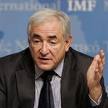
The International Monetary Fund (IMF) is not commonly thought of as a likely candidate for regime change. Whenever one hears such term, one thinks of strategically important States whose geopolitical patronage is being fought over by great powers: Belarus, Cuba, Iran, Libya, Myanmar, Syria, Ukraine, Venezuela and so on and so forth.
In fact, the IMF was established by the Western victors of World War Two, who reached an unwritten agreement whereby the World Bank would be run by an American whereas the IMF would be lead by a European, as explained above. Therefore, according to conventional wisdom, it is hardly conceivable that the most important intergovernmental financial organism worldwide could even hypothetically become the target for a regime change operation.
There might several member states interested in changing IMF policies or maybe even its overall direction, but it has to be acknowledged that only very few governments have the political willingness, the necessary contacts, the inside influence, the global reach or the technical capabilities to bring about such an outcome without serious consequences or at least without being visibly detected.
In that sense, back in 2007 even the Russian Federation failed to substantially promote its handpicked nominee, then Governor of the of the Czech National Bank Josef Tošovský. Instead, Dominique Gaston André Strauss-Kahn (DSK), a French politician associated with the Socialist Party, became Managing Director of the IMF as the candidate backed by the European Union, replacing Spaniard Rodrigo Rato.
DSK was even supported by right-wing French President Nicolas Sarkozy, who was allegedly trying to send away one the most prominent heavyweights of the Socialist Party (Reuters, 2007) and, it must be borne in mind, a potential challenger for Sarkozy’s UMP Party -Union pour un MouvementPopulaire- in the coming French presidential election that was to be held in 2012.
Moreover, what could possibly motivate a soft coup d’état against DSK?
There is an intriguing possibility. According to the UK-based newspaper The Guardian, in February 2011, Strauss-Kahn proposed the introduction of a new world currency that would challenge the supremacy of the US dollar and help ensure a greater financial stability prevails. The then managing director of the IMF specified that “using the Special Drawing Rightsto price global trade and denominate financial assets would provide a buffer from exchange rate volatility”, while “issuing SDR-denominated bonds could create a potentially new class of reserve assets“ (Stewart, 2011).
Said proposal, far from being far-fetched, is theoretically feasible because “even though there is no currency currently poised to dethrone the dollar, that does not mean that the euro, the yuan, or a basket of currencies such as the SDR could not eventually join the dollar as a reserve currency” (Carbaugh & Hendrik, 2009).
One must bear in mind that, during DSK’s tenure as Managing Director, the IMF published a study which examined the implications of enhancing the role of SRD in the context of the debate concerning international monetary reform, especially as a unit of account “which could be used to price internationally traded assets (e.g., sovereign bonds) and goods (e.g., commodities), to peg currencies, and to report balance of payments data” (International Monetary Fund, 2011).
Such solutions, according to the same IMF working paper, need to be taken into consideration in order to correct problems like persistent global imbalances, large and volatile capital flows, exchange rate fluctuations disconnected from fundamentals and insufficient supply of safe global assets, among others. Interestingly, the paper’s authors warn that political hurdles and constraints would need to be overcome (!).
It is important to consider that some specialists specify that an attack on the dollar’s position as the world’s top reserve currency amounts to an attack against the Achilles’ heel of American power. In fact,
“The second pillar of American dominance in the world [the first one being superior state-of-the-art military technology] is the role played by the US dollar as the international World Reserve Currency…Maintaining this is a strategic imperative if America seeks global dominance. It should be noted that dollar hegemony is in many respects more important than US military superiority. Indeed, removing the dollar pillar will naturally result in the diminishment of the military pillar” (Clark, 2005).
Hence, it is logical to believe that Washington is not willing to lose, at least not without a fight, the considerable economic and political advantages derived from the role of the US dollar as the only truly global reserve currency, which is used as a medium of exchange, unit of account and store of value all over the world, taking into consideration that “[from the American viewpoint,] war and insidious interventions of this sort may be costly, but the costs of not protecting the petrodollar system would be far higher” (Katusha, 2012).
The consequences would include “the loss of the exorbitant privilege of easy financing of large US deficits, both government and national. The political influence that American policy makers have internationally, including in international institutions, could also be diminished. If the euro were to overtake the dollar in a few decades, it would be a once-in-a-century event… [however, if] it happened to the pound in the last century, so who is to say it could not happen to the dollar in this?”(Frenkel& Chin, 2008).
Additionally, in a speech delivered by DSK back in late 2009, he stressed that even though he acknowledged that the US dollar was expected to remain the chief reserve currency for some (sic) time, “there have already been a number of valuable proposals for how to address concerns related to reserve currencies, including from prominent figures here in China. Some call for the creation of a new world reserve currency, possibly based on the Special Drawing Right (or SDR)—the composite currency issued by the IMF. Another possibility is for a multi-reserve currency system to emerge, with the euro, the yen, and the renminbi perhaps serving as co-equal anchors. These are useful ideas that will influence the future discussion of this issue”.
On that occasion, the then IMF Managing Director went ever farther when he explored the potential implications of the “unprecedented shift in relative wealth and economic power” –as the US intelligence community terms it (National Intelligence Council, 2008)– away from the West to the Eastern hemisphere. He explained that, given that the economic balance of power is being reconfigured,
“for China and for Asia as a whole, a growing voice on the international stage means tremendous opportunities to contribute to the reshaping of the post-crisis global economy… China, no doubt, will play a leadership role in making the changes needed to embark on a new growth path that secures long-term economic success for all nations… [adding that] China’s role in the international policy debate has been rising in tandem with its growing economy. As a key member of the G-20, China is helping to elaborate the global policy priorities for the future, and devise solutions to global problems. And at the IMF, China is supporting our efforts to adapt and serve the needs of our member countries even more effectively”.(Strauss-Kahn, 2009).
Remarkably, in April 2011 –shortly before the abrupt end of DSK’s tenure as its Managing Director–, the IMF forecasted that, by 2016, China’s GDP, measured in terms of power purchasing parity, will have overtaken the United States as the largest economy on Earth. It is not news devoid of deeper ramifications because “It is the first time the IMF has put a time frame on the communist country’s inevitable march, and the forecast has profound implications for the balance of global power […moreover, said prediction casted] a deepening cloud over the future of the dollar as the world’s dominant currency as well as Washington’s attempts to close the budget gap and rein in the nation’s ballooning debt”. (Gardner, 2011).
IMF special studies and estimations go beyond the realm of intellectual or academic interests alone because “the most useful function that the IMF contributed to the debate about policy coordination was through the provision of data and forecasts” (Bordo& James, 2000). The importance of which is highlighted due to the fact that “[said intergovernmental organization’s] board usually meets several times a week and carries out its work largely on the basis of papers prepared by IMF staff” (Reynaud &Vauday, 2007). Incidentally, said forecasts “are not purely based on economic considerations” (Dreher, et al., 2007).
The ultimate (geo)political significance of the aforementioned did not go unnoticed by political analysts. The IMF’s projection was certainly unwelcomed in Washington since “whether deserved or not, the IMF has a lot of credibility.
By placing China as the number one economic power by the end of the next US presidential term, the IMF thrust a dagger through the heart of American hegemony. Washington’s power is based on America’s economic supremacy. The IMF report said that this supremacy was at its end. This kind of announcement tells the political world that, as the headline read, ‘the age of America is over’” (Roberts, 2011). So, Strauss-Kahn possibly constituted a much formidable and dangerous challenge due to his “perfect position to shape policy and to persuade foreign heads of state that replacing the dollar is in their best interests” (Whitney, 2011).
Even if DSK’s provocative statements were not monitored by the mainstream media, they could not have gone unnoticed by neither the US intelligence community nor by financial players interested in maintaining the dollar hegemony. Needless to say, it is clear that said reckless pronouncements were not received warmly.
Strauss-Kahn is (was?) a member of the Western elite as a representative of Old Europe’s Franco-German establishment –in contrast to the evident pro-Atlantist position held by President Sarkozy–. Regardless, DSK was presumably framed by law enforcement authorities closely linked to New York politician and Wall Street businessman Michael Bloomberg (Chossudovsky, 2011). In the cases of both Eliot Spitzer and Dominique Strauss-Kahn, some analysts suspect that “behind the curtain might be found investment bankers and international financiers” (Bucci, 2011).
Furthermore, it was reported that French politician Michelle Sabban stated that she
“[was] convinced it is an international conspiracy [because] it’s the IMF they wanted to decapitate, not so much the Socialist primary candidate […adding that] it’s not like him. Everyone knows that his weakness is seduction, women. That’s how they got him” (Allen, 2011).

In the light of the above, It must not be overlooked that Russian President Vladimir Putin stated he disbelieved the official version of the DSK sex scandal because the “real political underlying reasons… [were] hard to evaluate” (Osborn, 2011). Taking into account his professional background as a KGB spook, Mr. Putin is clearly not unfamiliar with dirty tricks such as ‘honey traps’ and ‘character assassination’ and, more importantly, his opinion openly endorses the view that there were political factors involved (!).
There are other additional circumstances worth taken into consideration. Then under the helm of DSK, “on November 11-12, 2010, IMF member states agreed on a package of reforms, the core of which is a doubling of overall IMF quota to about $755 billion. In addition, there would be a significant shift of voting power to dynamic emerging market economies. If the reforms are implemented, the ten largest members of the IMF will consist of the United States, Japan, the four largest European economies (France, Germany, Italy, and the United Kingdom) and Brazil, China, India, and Russia” (Weiss, 2012).
Said proposed redistribution, needless to say, was not enthusiastically received in some circles whereas because it favors emerging powers. Meanwhile, “China is urging the IMF to […] accelerate its own internal governance reforms [i.e.] changes in voting shares to reflect changes in the international balance of economic power” (Chin & Wang, 2010).
Conversely, some pundits speculated that
“Strauss-Kahn could just as easily been set up by rivals inside the IMF, as well as by rivals within the French political establishment… [due to the fact that] Wall Street and the US government also had strong reasons to eliminate him” (Roberts, 2011).
Other commentators wondered if DSK’s actions –specially his promotion of SDR as alternative to the US Dollar– could have unleashed the ire of “some very powerful and well-connected people” (Whitney, 2011).

The apparent participation of operatives close to French President Nicolas Sarkozy, a staunch supporter of US foreign policy, suggests another factor worth scrutinizing beyond the undeclared goal of triggering ‘regime change’ at the IMF, namely, the possibility that DSK might have competed in the then incoming France’s presidential, successfully challenging then incumbent President Sarkozy: To be precise,
“a Strauss-Kahn presidency and a ‘Socialist’ government would have been a serious setback for Washington, contributing to a major shift in Franco-American relations. It would have contributed to weakening Washington’s role on the European political chessboard, leading to a shift in the balance of power between America and ‘Old Europe’ (namely the Franco-German alliance)” (Chossudovsky, 2011).
Both possibilities, it has to be borne in mind, are not mutually exclusive. Far from it: They reinforce one another.
Conclusions
«…and wine maketh merry, but money answereth all things» –Ecclesiastes 10:19
There is way too much at stake regarding the evolution of monetary hegemony. As has been discussed throughout this paper, the indisputable symbiosis of geopolitics and finance is a concern of the highest political order for top decision makers and, as a result, there are powerful States and groups involved. Moreover, the IMF is a most critical multilateral organization whose proclivity is ultimately decisive. Thus, resourceful players want to ensure that such intergovernmental institution, far from being neutral, favors their interests at the expense of potential challengers, real or imagined.
In practical terms, the aforementioned implies that, as the issuer of the world’s top reserve currency, the US simply cannot afford to be a passive observer while the IMF promotes an alternative, however hypothetical, to the monetary system of dollar hegemony. The United States is likely to perceive any such attempt as a ‘deviation’ that needs to be corrected one way or another whereas financially capable competitors politically willing to undermine the dollar’s supremacy certainly consider the American currency’s reign as factor that somehow will need to be deconstructed in order to irrevocably dismantle one of the major elements of US power, contributing to catalyze its geopolitical decadence.
Thus, the monetary system is doomed to become an increasingly confrontational arena. At this point, the battle’s final results are, at best, unclear and cannot be precisely foreseen with an ample degree of accuracy. Yet only one thing is certain: Conflict is and will be inevitable, both among great powers as well as among currencies. Monetary war shall be waged through both conventional and unconventional means. Consequently, intensifying attacks and backlashes are to be expected either within the institutional framework of the IMF or, more importantly, outside of it. In other words, the future of monetary hegemony will not be defined peacefully and, of course, there will be havoc, losses and casualties.
In the light of the above, although it cannot be authoritatively confirmed that there was a clandestine conspiracy organized by a powerful cabal of financial and political forces at the highest levels to unseat Dominique Strauss-Kahn as the IMF Managing Director, the circumstantial evidence analytically hereby scrutinized leads to the reasonable conclusion that the ultimate goal of such plot involving the judicialization of monetary geopolitics was to prevent the IMF from becoming a solid platform for launching any initiative considered as a credible alternative to the dollar hegemony, thus impeding any meaningful reform of the international monetary system’s current distribution of power any time soon. Geopolitically speaking, this hypothetical interpretation does make sense.
On the other hand, the determination to eliminate a competitive adversary who was acquiring enough political capital and momentum to defy President Sarkozy’s bid for reelection in 2012 represented no more than a secondary concern.


 Professional traders already have the knowledge and experience to know which trading techniques and trading systems could be profitable and which trading techniques and trading systems should be avoided, but professional traders are not looking for a new trading technique or trading system (because they are already trading correctly). New traders do not have the knowledge and experience to know which trading techniques and trading systems could be profitable and which trading techniques and trading systems should be avoided, and new traders are exactly the traders who are looking for a new trading technique or trading system (and even worse new traders are often still looking for the holy grail of trading).
