qas30

--== It is Not Random But Designs ==--
Having trading discipline is the beginning; keeping discipline is the progress;
staying discipline is the success

Wall Street Panicked by Chinese House Wives Gold Buying

Published on: Rabu, 19 Februari 2014 in , , ,
An article surfaced today in China discussing a new player in the gold market that has Wall Street running scared The new player is the Chinese housewife. This typical Chinese housewife as described in the article is between 40 to 60 years old with investable assets of between $10,000-$10 million dollars. This representative housewife in addition to her assets also has what approaches zero knowledge of investment knowledge.

The article goes on to give one example Of these “Mad hunters of Gold” whom they call Auntie Kimmy. Auntie Kimmy has purchased $2 million Yuan ($330,00 USD) worth of gold over the last year. When asked if she was disappointed by the decline in gold prices, Aunti Kimmy said, “Not at all, ..this gold is going to my children.”
It is this mentality that has Wall Street nervous. Quoted in the article is State Council Development Research Center, Institute for International Economics Visiting Researcher Zhang Jie who was quoted as saying Wall Street and the Fed should be very nervous. The business of loaning out based on gold reserves is over as once the gold arrives in China, it is never going back.

Makna Tangis Sang Walikota Surabaya

Published on: Minggu, 16 Februari 2014 in
“Mata Najwa” malam ini menurutku telah berhasil menyibak apa sebenarnya yang terjadi dengan Indonesia. Mengapa Indonesia tampak begitu sulit bahkan rumit untuk bangkit dari keterpurukannya. Kita tahu gerakan reformasi sekarang telah menjadi bagian dari sejarah masa lalu. Suatu gerakan yang gegap gempita penuh ambisi demi menata kembali Indonesia setelah 3 dekade berada di genggaman rezim otoriter. Tapi apa hasilnya? Para penjahat dan pencuri justru semakin banyak bertumbuh. Mereka tidak saja keliaran di jalanan tapi juga bisa sambil duduk di kursi terhormat seorang pejabat. 

Tri Rismaharini sang Walikota Surabaya yang tampil di “Mata Najwa” malam ini adalah di antara sedikit pejabat yang relatif aman dari “penyakit” yang umumnya diidap pejabat. Dia begitu total membangun kotanya. Orang menyebutnya sebagai Walikota yang gila taman karena keberhasilannya bikin kota Surabaya indah dan nyaman. Tapi baginya itu hanya prestasi permukaan saja. Di balik itu masih ada segudang persoalan. Misalnya yang selalu gak lepas dari pikirannya adalah rakyat kecil yang hidup miskin, anak-anak yang tidak sekolah, orang-orang sakit yang gak terurus, dan prostitusi yang begitu dahsyat di kotanya. Bayangkan! Ada seorang ibu yang hingga di usianya yang ke 60 tahun masih tetap menjalani pekerjaannya sebagai PSK dengan pelanggan anak-anak SD dan SMP. 

Sang Walikota tampak tak kuasa menahan air mata ketika bercerita soal prostitusi. Selain itu kita lihat dia juga beberapa kali harus menangis yang mengisyaratkan adanya tantangan politik yang luar biasa berat yang menghalangi langkah-langkahnya. Kita tahu ada pengangkatan Wakil Walikota yang ternyata tidak dikomunikasikan lebih dulu dengan orang yang akan diwakilinya. Ada problem Kebon Binatang Surabaya (KBS) yang telah disebut sebagai kebon binatang terbuas di dunia dan sulit di atasinya sehingga dia merasa perlu melaporkannya ke KPK. Ada apa sebenarnya dengan KBS? Dia tampak begitu hati-hati menjawab pertanyaan Najwa Syihab soal ini. 

Kita jadi ikut bertanya-tanya, tantangan politis macam apa sebenarnya yang tampaknya sukses bikin sang Walikota perempuan yang terkenal perkasa ini goyah? Bahkan Walikota dengan penghargaan sebanyak 51 dan calon Walikota terbaik dunia ini pernah terbersit ingin mundur dari jabatannya, apa sebenarnya yang terjadi? Najwa Syihab menyatakan dalam pembukaan di “Mata Najwa”, “Politik mengganggu hatinya”. Ya….tapi macam apa gangguannya? Yang pasti menurut Tjahjo Kumolo (Sekjen PDIP) bahwa Walikota itu jabatan politik. Jadi dia itu dikontrol oleh partai politik, dikontrol oleh masyarakat, diangkat oleh partai politik. Jadi dia perlu menyesuaikan diri.

Walikota perkasa, dicintai rakyat, prestasinya yang gemilang bahkan diakui dunia. Tetapi sempat berpikir untuk mengundurkan diri dari jabatannya. Sedahsyat apa tantangan itu sehingga harus mengubur mimpi besarnya untuk membawa Surabaya sebagai kota terbaik dunia? Sementara ada pejabat-pejabat lain dengan prestasi biasa-biasa saja justru terkesan menikmati kedudukannya. Oh…mengapa orang-orang baik itu selalu tersudutkan? Sementara mereka yang setengah baik bahkan jahat malah dibela-bela dan hidup mulia? Oh……inikah yang selama ini bikin Ibu Pertiwi berduka berkepanjangan? Dan terpaksa membiarkan diri didahului bangsa-bangsa lain yang dahulu pernah “disusuinya”
____________
Semoga Walikota kebanggaan rakyat ini tidak benar-benar mengundurkan diri, menyusul orang hebat Rustriningsih yang terpaksa harus turun gelanggang.

sumber 

Top 50 US Hedge Fund Groups

Published on: Senin, 10 Februari 2014 in ,
Below is the list of the top 50 US Hedge Fund Groups organized by firm name, location, Jan. 07 AUM$B, Growth in 2006 and SEC Regulated Y/N
  1. Stark Investments* St. Francis WI 10.83 42.46% Y
  2. Davidson Kempner Advisers** New York NY 10.26 65.48% Y
  3. Highfields Capital Management Boston MA 10.00 29.87% N
  4. Wellington Management Co.** Boston MA 10.00 19.05% Y
  5. Canyon Capital Advisors Beverly Hills CA 9.60 18.52% Y
  6. AQR Capital Management Greenwich CT 9.50 21.79% Y
  7. Fortress Investment Group** New York NY 9.40 38.24% Y
  8. Maverick Capital New York NY 9.30 -15.45% Y
  9. Duquesne Capital Management** Pittsburgh PA 8.80 10.00% N
  10. Millennium Management** New York NY 8.60 32.31% N
  11. Adage Capital Management Boston MA 8.10 n/a N
  12. Cantillon Capital Management New York NY 8.10 6.58% Y
  13. York Capital Management New York NY 8.00 5.26% Y
  14. Lone Pine Capital Greenwich CT 7.94 5.84% N
  15. Black River Asset Management Minnetonka MN 7.90 75.56% Y
  16. King Street Capital Management New York NY 7.40 21.31% N
  17. Baupost Group Boston MA 7.36 26.90% Y
  18. Bain Capital/Brookside Capital Partners Boston MA 7.30 40.38% N
  19. BlackRock New York NY 7.30 92.11% Y
  20. Pequot Capital Management Westport CT 7.30 2.82% Y
  21. AllianceBernstein* New York NY 7.20 53.19% Y
  22. TPG-Axon Capital New York NY 7.20 26.32% N
  23. Paulson & Co. New York NY 7.14 62.36% Y
  24. Elliott Associates Greenwich CT 7.00 25.00% N
  25. Grantham, Mayo, Van Otterloo** Boston MA 7.00 52.17% Y
  26. JPMorgan Asset Management1 New York NY 34.00 74.36% Y
  27. Goldman Sachs Asset Management New York NY 32.53 47.87% Y
  28. Bridgewater Associates* Westport CT 30.20 47.32% Y
  29. D. E. Shaw Group New York NY 26.30 39.89% Y
  30. Farallon Capital Management* San Francisco CA 26.20 58.79% Y
  31. Renaissance Technologies Corp. East Setauket NY 24.00 175.86% Y
  32. Och-Ziff Capital Management New York NY 21.00 40.00% Y
  33. Cerberus Capital Management New York NY 19.15 69.60% N
  34. Barclays Global Investors* San Francisco CA 18.90 28.57% Y
  35. ESL Investments** Greenwich CT 18.00 20.00% N
  36. Citigroup Alternative Investments New York NY 15.77 162.85% Y
  37. Tudor Investment Corporation Greenwich CT 15.17 17.60% N
  38. Caxton Associates New York NY 14.20 10.08% Y
  39. Atticus Capital New York NY 14.00 60.92% N
  40. Campbell & Co. Towson MD 13.80 15.00% Y
  41. Citadel Investment Group Chicago IL 13.50 12.50% N
  42. Moore Capital Management New York NY 12.50 22.55% N
  43. Avenue Capital Group New York NY 12.40 37.78% Y
  44. Perry Capital New York NY 12.34 8.26% Y
  45. SAC Capital Advisors Stamford CT 12.00 41.18% N
  46. Soros Fund Management New York NY 12.00 25.00% N
  47. HBK Investments Dallas TX 11.90 35.23% Y
  48. FX Concepts New York NY 11.25 44.19% Y
  49. Angelo, Gordon & Co. New York NY 11.00 10.00% Y
  50. Fairfield Greenwich Group New York NY 11.00 50.68% Y

Bisakah Kaya Dengan Forex

Published on: Minggu, 09 Februari 2014 in ,
Tuhan memberi porsi pada setiap orang sesuai kadarnya, Porsi tersebut terbagi - bagi hingga akhirnya Sunatullohpun berjalan seimbang, ada "kaya" ada "Miskin" ada sehat ada sakit..ada siang ada malam, ada benar dan ada salah, ada rakyat ada pejabat dsb dsb..disinilah berlaku sifat Rahman dan Rahim-Nya serta pembuktian segala sifat lain-Nya Dia.,,
camkan dan fikirkan dulu ini baik - baik...

Trus muncul pertanyaan bisa gak kita kaya dari forex..?? Tidak ada yang tidak mungkin bagi Tuhan jika Dia sudah berkehendak..ada 3 perkara yang saya renungi dalam hidup untuk mencapai satu keberhasilan :

Alloh SWT berjanji dan karena ini janji-Nya masa kita gak yakin :

"Akan diangkat keutamaan suatu kaum ( hamba ) dengan "Iman" dan "ilmu" hingga beberapa derajat" itu janji-Nya dalam Kitabullah.

Mari kita renungi sama-sama janji Alloh Ta'ala tersebut, "iman dan Ilmu" Jalankan aspek keimanan dengan sebaik-baiknya, kemudian "Ilmu"..ya harus punya ilmunya tidak hanya dalam bidang investasi saja, khususnya Foreign Exchange, namun dalam usaha apapun yang ditekuni harus mengerti dan faham ilmunya...kata pertama yang Dia tekankan di depan adalah "Iman"..dan renungi baik-baik itu..

Terelepas nanti hasil yang didapat karena itu sudah pasti ada dalam kadar dan porsi tertentu yang sudah ada takaran dari Dia Yang Maha Tahu.

Tahunan masih gagal..sudah belajar dan belajar, pembenahan emosi, technical dan bla bla bla lainnya, mari kita renungi kembali pada hukum-Nya dimana Dia "Tidak menempatkan satu porsi untuk semua orang"..sadari itu jika limit yang dicari sudah melampui batas dan jangan dipaksakan, mungkin jalan yang terbaik bukan yang ini, namun ada porsi lain yang akan Alloh Ta'ala berikan yang jauh lebih baik yang tidak kita ketahui, dan tidak mudhorot...tolong renungi...

Memang proses pencarian dan pembelajaran dalam bidang ini bukan kurun waktu singkat dengan berbagai pengorbanannya yang tidak kecil dan sedikit baik itu moril apalagi materil, sangat lain dan berbeda dengan usaha riil lainnya, atau kerja pada satu badan instasi, bidang ini sangat sangat jauh berbeda.

"Tentukan limit", limit waktu, juga berapa dana yang siap anda ( habiskan dalam masa proses pembelajaran ) karena bukan kurun waktu sebentar yang bisa digapai dalam 1-2 tahun saja, jika ini memang jalan anda, setelah 2 proses tadi di jalankan sebaik-baiknya ( Iman dan Ilmu ) , maka insya alloh akan dimudahkan.

Sekali lagi kenapa menentukan limit..agar jangan kebangblasan karena terlalu merasa yakin, dan kembali pada hukum sunatulloh tadi "It's Not For Every One...Everything Is Not For Every Single Person" itu hukum Dia..bukan hukum saya atau anda.

Dan juga agar kita tidak buruk sangka pada keadaan apalagi pada Alloh Ta'ala ketika kegagalan datang, padahal sudah dijalankan sedemikian lama..tapi masih begini begini saja bukannya mendapatkan apa yang di inginkan, namun yang ada makin parah...yakinlah Dia akan berikan yang jauh lebih baik..

Lalu yang ke tiga Alloh Ta'ala berjanji juga :

"Jika kamu bersyukur akan aku tambah nikmat-Ku, namun jika kamu lalai nantikan adzab-Ku"

Jika saja anda diberi amanah ( dalam bidang apapun ) ya jaga dengan syukur, karena hakikatnya apa yang ada dikita hanya titipan saja, yang bisa Dia ambil lagi kapanpun Dia Mau, dengan berbagai cara Dia..

Pun halnya bidang ini, jika saja anda bisa berhasil jalankan aspek syukur, jaga yang sudah Dia beri untuk anda dengan wujud syukur agar tetap ada titipan nikmat-Nya pada kita..gak perlu lah kita takabbur, sombong' 'ujub, Riya.. dsb...ntar dicabut lagi kan repot...

Kesimpulannya coba terapkan 3 aspek tadi : - Iman, - Ilmu, dan Syukur... ada satu pertanyaan kecil dari saya.."Selalu gak kita ucap nama-Nya ketika kita buka komputer..mau menempatkan posisi dsb"...

"Kaya itu relatif Gan.."Kaya Rasa" yang sulit..


Success Gan..

Qas30


Currency Wars: The Greatest Currency Trades Ever Made

Published on: Kamis, 06 Februari 2014 in , ,
The foreign exchange (forex) market is the largest market in the world because currency is changing hands whenever goods and services are traded between nations. The sheer size of the transactions going on between nations provides arbitrage opportunities for speculators, because the currency values fluctuate by the minute. Usually these speculators make many trades for small profits, but sometimes a big position is taken up for a huge profit or, when things go wrong, a huge loss. In this article, we'll look at the greatest currency trades ever made.

Currency Wars: Three of the Biggest Currency Raids in History
The Currency Raids of George Soros and Andrew Krieger

In 1987, Andy Krieger, a 32-year-old currency trader at Bankers Trust, was carefully watching the currencies that were rallying against the dollar following the Black Monday crash. As investors and companies rushed out of the American dollar and into other currencies that had suffered less damage in the market crash, there were bound to be some currencies that would become fundamentally overvalued, creating a good opportunity for arbitrage. The currency Krieger targeted was the New Zealand dollar, also known as the kiwi.

Using the relatively new techniques afforded by options, Krieger took up a short position against the kiwi worth hundreds of millions of dollars. In fact, his sell orders were said to exceed the money supply of New Zealand. The selling pressure combined with the lack of currency in circulation caused the kiwi to drop sharply. It yo-yoed between a 3 and 5% loss while Krieger made millions for his employers.

One part of the legend recounts a worried New Zealand government official calling up Krieger's bosses and threatening Bankers Trust to try to get Krieger out of the kiwi. Krieger later left Bankers Trust to go work for George Soros.  

Throughout history there have been raids on financial markets.  Sometimes the raids are malicious – an attempt to corner a market or push the price to an artificially low or high price.  In other situations a raid is simply taking a huge calculated bet on what the trader sees as an inevitable outcome.  The size of the bet has the added effect of often forcing the hands of other traders and politicians to see the error in the ways, thus moving the currency in the raiders favor.  Such raids are a statement by the speculator about policy, regulations, manipulation or the current unsustainable price of a currency.
Two traders took huge positions in the Pound and Kiwi which ultimately resulted in sharp declines and huge profits from the respective currency meltdowns.  The currency raids in these instances were not necessarily malicious (although some may view them as such), but the huge positions did cause the currencies to decline much quicker than they may have otherwise.


Get an instant and free short, medium and long-term trend analysis of the EURUSD or USDJPY
Currency Raids – $300 million Kiwi Currency Raid'
It is autumn, 1987 and Andrew Krieger, a trader at Bankers Trust, is watching the New Zealand dollar (NZD) in the aftermath of the 1987 stock market crash.  Currencies such as the NZD (also called the “Kiwi”) are being bid up by traders fearful of holding US dollars.  This leads to a short-term overvaluation of many currencies relative to the USD, but Krieger focused on the Kiwi.
New Zealand has a fairly small economy, and using options Krieger is able to ultimately short the entire money supply of New Zealand (according his book The Money Bazaar).  This would have been impossible if he only used the cash market.
Other traders and even the New Zealand government get involved.  The government asks Krieger to stop the raid, but ultimately the market agrees with Krieger.   The Kiwi sells-off 5% in a single day, with intra-day fluctuations up to 10% according to some sources.  Much of the decline is pinned on Krieger selling massive amounts of Kiwi dollars, yet it is also other traders acting on the information which ultimately leads to Krieger being exit his positions with a profit.
The estimated profit to Bankers Trust was $300 million.  Of which Krieger got a $3 million bonus.  This “tiny” bonus on such a well executed trade disgusted Krieger and ultimately he left Bankers Trust, going to work for George Soros in 1988.
In 1988 Bankers Trust admitted that profits from their options trading activity was overstated by $80 million in Q4 of 1987.  Therefore the profits made specifically by Krieger are drawn into question, as the many of the options that were revalued involved Kiwi dollars.  Such options were fairly new, and it is possible that Krieger was much of the market in such instruments at the time, making the options hard to value.
Either way, Krieger’s position is estimated to have been $700 million to $1 billion, with profits in the range of $220 (lowest possible gain) to $300 million.
Currency Raids – Conclusion
In both these cases, Soros and Krieger made massive bets that the rates in the GBP and NZD were unsustainably high.  Whether the traders caused the decline is ultimately questionable, but there is no doubt that the large positions frightened the market in the speculator’s direction and made the market realize these currencies were overvalued.
In the case of Soros, he saw an economic and political situation which could not sustain a high GBP price.  Krieger shorted massive amounts of the Kiwi, thinking it was artificially high after the 1987 stock market panic.  Both traders capitalized on what they viewed as an overpriced currency, and very effectively helped to bring the currency back in line with what they believed to be a more fair value.


Stanley Druckenmiller Bets on the Mark - TwiceStanley Druckenmiller made millions by making two long bets in the same currency while working as a trader for George Soros' Quantum Fund.

Druckenmiller's first bet came when the Berlin Wall fell. The perceived difficulties of reunification between East and West Germany had depressed the German mark to a level that Druckenmiller thought extreme. He initially put a multimillion-dollar bet on a future rally until Soros told him to increase his purchase to 2 billion German marks. Things played out according to plan and the long position came to be worth millions of dollars, helping to push the returns of the Quantum Fund over 60%.
Possibly due to the success of his first bet, Druckenmiller also made the German mark an integral part of the greatest currency trade in history. A few years later, while Soros was busy breaking the Bank of England, Druckenmiller was going long in the mark on the assumption that the fallout from his boss' bet would drop the British pound against the mark. Druckenmiller was confident that he and Soros were right and showed this by buying British stocks. He believed that Britain would have to slash lending rates, thus stimulating business, and that the cheaper pound would actually mean more exports compared to European rivals. Following this same thinking, Druckenmiller bought German bonds on the expectation that investors would move to bonds as German stocks showed less growth than the British. It was a very complete trade that added considerably to the profits of Soros' main bet against the pound.

George Soros Vs. the British PoundThe British pound shadowed the German mark leading up to the 1990s even though the two countries were very different economically. Germany was the stronger country despite lingering difficulties from reunification, but Britain wanted to keep the value of the pound above 2.7 marks. Attempts to keep to this standard left Britain with high interest rates and equally high inflation, but it demanded a fixed rate of 2.7 marks to a pound as a condition of entering the European Exchange Rate Mechanism (ERM).

Many speculators, George Soros chief among them, wondered how long fixed exchange rates could fight market forces, and they began to take up short positions against the pound. Soros borrowed heavily to bet more on a drop in the pound. Britain raised its interest rates to double digits to try to attract investors. The government was hoping to alleviate the selling pressure by creating more buying pressure.

Paying out interest costs money, however, and the British government realized that it would lose billions trying to artificially prop up the pound. It withdrew from the ERM and the value of the pound plummeted against the mark. Soros made at least $1 billion off this one trade. For the British government's part, the devaluation of the pound actually helped, as it forced the excess interest and inflation out of the economy, making it an ideal environment for businesses.


Currency Raids – George Soros and the $1 billion Profit
Leading up to Black Wednesday on September 16, 1992 when the British government was forced out of the European Exchange Rate Mechanism (ERM), there were many issues facing Britain.
The ERM required that Britain maintain the currency from fluctuating more than 6% against other currencies within the ERM.  The problem was that at the time Britain had an inflation rate three times that of Germany.  The ERM was also under attack itself as member countries felt the model would not work in the face of real-world issues. Britain falsely assumed that by joining the ERM inflation would be curbed – after all, Germany was part of the ERM and it had a very low inflation rate at the time.

George Soros saw through this tactic.   He correctly calculated that joining the ERM would do nothing to help the Pound, but would likely only hold the currency at artificially high levels.  With nothing substantial to hold the currency up it would eventually come crashing down as Britain was forced to realize the ERM could not save it from declining.

George Soros and other speculators shorted the Pound leading up to September 16, expecting that policy makers would be unable to support the currency above the fluctuation band it was mandated to adhere to.  In return, the Treasury tried to offset the speculators selling by buying Pounds.  This temporarily allowed the Pound to stay within “the band,” but ultimately even the Treasury couldn’t support the currency.  The Pound began to fall and British government got desperate.

On September 16, the government raised interest rates from 10% to 12% in attempt to bring buying support into the GBP.  The plan didn’t work and the Pound continued to fall. The massive interest rate hike was seen as a desperate attempt, and a very real signal, that the Pound was in big trouble.  More sellers flooded the market and that same day Britain said interest rates were moving up to 15%.  The announcement had little effect and was ultimately was not implemented.  Faced with a falling Pound and being unable to stabilize the currency within the band, Britain was forced to withdraw from the ERM.

In September alone the GBP/USD fell 15%, but the fallout continued.  By December the pair had fallen 25.4% – from a 2.0085 high in September to a 1.4980 low in December, 1992.
The falling Pound ultimately allowed the British economy to rebuild. It is for this reason September 16, 1992 is also called “Golden Wednesday.”

A Thankless JobAny discussion around the top currency trades always revolves around George Soros, because many of these traders have a connection to him and his Quantum Fund. After retiring from active management of his funds to focus on philanthropy, Soros made comments about currency trading that were seen as expressing regret that he made his fortune attacking currencies. It was an odd change for Soros who, like many traders, made money by removing pricing inefficiencies from the market. Britain did lose money because of Soros and he did force the country to swallow the bitter pill of withdrawing from the ERM, but many people also see these drawbacks to the trade as necessary steps that helped Britain emerge stronger. If there hadn't been a drop in the pound, Britain's economic problems may have dragged on as politicians kept trying to tweak the ERM.
The Bottom LineA country can benefit from a weak currency as much as from a strong one. With a weak currency, the domestic products and assets become cheaper to international buyers and exports increase. In the same way, domestic sales increase as foreign products go up in price due to the higher cost of importing. There were very likely many people in Britain and New Zealand who were pleased when speculators brought down the overvalued currencies. Of course, there were also importers and others who were understandably upset. A currency speculator makes money by forcing a country to face realities it would rather not face. Although it's a dirty job, someone has to do it.

Hati-Hati Dengan Modus Marketing Broker Lokal

Published on: Rabu, 05 Februari 2014 in , ,
Waktu th 2013 an pas Ramadhan, habis buka puasa, suntuk banget iseng ah maen ke temen, setibanya di sana ada seorang yang sedang nunjukin demo acc, sementara yang lainnya pada nonton, saya sendiri diem saja liatin si arsitek nerangin bla bla bla..indicator di pasang di 30M, indinya BB tambah ma settingan periodic tertentu, kemudian stoch, dan potongan RSI.

Kebetulan temen tersebut buka usaha jual beli komputer, serta reparasinya jadi sarana di dia ada, saya diem saja liatin..( walau gatel sih he he he ) dia pun demo di EUR/USD bgt harga nyentuk tuh BB sell lah dia dengan TP 5 pips an SL 40 pips an .

Pembicaraan beliaupun berlanjut, menerangkan ini dan itu,..ehh ujung-ujungnya dia ternyata adalah marketingnya "MILLE" sembari Demo tersebut diapun nawarin untuk berinvestasi pada pak A " kalau bapak mau belajar sok sekalian invest di saya minimal 30 jutaan" busettt dah.."investor saya rata rata 50jt an yang investasi"

Gak kuat nahan akhirnya mulai tak pancing pancing hi hi hi hi.."boleh liat statementnya pak..???" barangkali ada portfolionya yang di upload ke Myfxbook atau MT4i.." tanya saya. atau punya gak gan portfolio 3 bulanan atau lebih saya ingin lihat.."

"wah gak ada"..jawab dia..saya hanya tersenyum saja..he he he, EU itupun loncat-loncat BB settingannya tembus SL pun kena. wualah.."Nah ini karena berita makanya begini"..asli senyum saya..campur bt bin eneuk.. liatnya.

Katanya sih dia sudah 2 tahun lebih di bidang FX sebelumnya di index...Mau lanjut bahas juga males..kebetulan saya upload archieve trade tadi sore pas sell GU dan GJ...beserta gbnya "saya alhamdulilah kang..tadi sore sell GBP/USD dan GJ profit..dan bukan 5 pips :D"

"trade di mana kang..??" tanya dia..di broker apa..Depo berapa..?? "nganu FX depo kecil kok senganu" he he he..bingung dia.."beda ya" kata dia..he he he emang broker hanya itu saja gan..setelah liat archieve trade saya dia pun pergi gak nyamperin lagi..ha ha ha..

Kemudian selang beberapa bulan kemudian saya ketemu temen, yang kebetulan dia dulu kerja di tempat tersebut yang juga pernah trading..(temen tersebutpun kenal dengan si Marketing Mille tsb), akhirnya kamipun deket, dan sering diskusi, temen cerita, suatu hari dia ketemu si Marketing Broker Local tsb, kemudian nawarin ke dia.. "Bro follow up customer minimal 30-40jt an ntar ente ane kasih komisi 5jt.."..gitu kata ke sy gan..kata temen saya tsb. "trus..?" tanya saya...."saya balikin saja gan..ente yng follow up ane kasih double 10jt ane yg tradingin..mabur dia gak mangap gan" kata temen sy tersebut.

Blom lagi pengalaman temen yg lain yg pernah terjerat, di kasih indi alligator doang.."kata si marketing tsb asal mangap kayak buaya laper maka akan makan,..buy sell di situ..buset dah makan komisi iya..hahaha 100jt an lebih angus...( To sobat di Lmjng..hi hi hi sorry brow just memories ya..)..

Buat masyarakat awam juga jika dateng mahluk-mahluk begini.."tanyakan portfolio trade mereka minimal diatas 1 tahun"..jika mereka nawar-nawarin atau ngajak - ngajakl investasi - investasian,..Logika..jika mereka bisa atau berhasil dari trade ngapaiin mesti nyari nyari investor :D..kan sdh cukup dr tradenya juga, jangan tergiur mulut manisnya.

Intinya ( "ternyata oh ternyata..dalam hati..".$#@!@!@!@@%%%^..!!!!" ) beneran kasihan buat mereka yang tergiur omongan manis marketing-marketing broker lokal ini, dengan pengetahuan yang minim.untuk .kejar komisi..dsb...cari makan sih cari makan tapi jangan begitu ente..sadar ente-ente..!!

Ane nulis di belakang jika ente beneran jago ngetrade..ngapaiin jadi marketing broker local, nyari nyari mangsa untuk komisi ente baca ini ..seupil komisi segitu mah..he he he..coba berani gak ente demo depan mereka lol.

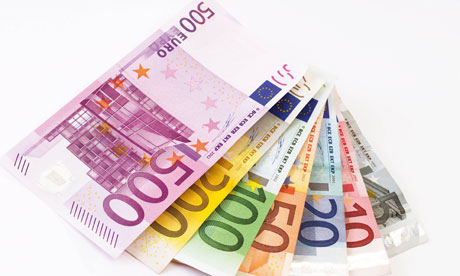
Introduction Of The Euro 1999

Published on: Selasa, 04 Februari 2014 in , , ,
The introduction of the euro was a monumental achievement, marking the largest monetary changeover ever. The euro was officially launched as an electronic trading currency on January 1, 1999 . The 11 initial member states of the European Monetary Union (EMU) were Belgium , Germany , Spain , France , Ireland , Italy , Luxembourg , the Netherlands , Austria , Portu­gal , and Finland . Greece joined two years later. Each country fixed its cur­rency to a specific conversion rate against the euro, and a common monetary' policy governed by the European Central Bank (ECU) was adopted. To many economists, the system would ideally include all of the original 15 European Union (EU) nations, but the United Kingdom , Swe­den , and Denmark decided to keep their own currencies for the time being. Euro notes and coins did not begin circulation until the first two months of 2002. In deciding whether to adopt the euro, EU members all had to weigh the pros and cons of such an important decision.
While ease of traveling is perhaps the most salient issue to EMU citizens, the euro also brings about numerous other benefits: 

•  It eliminates exchange rate fluctuations, thereby providing a more sta­ble environment to trade within the euro area.
•  The purging of all exchange rate risk within the zone allows busi­nesses to plan investment derisions with greater certainty.
•  Transaction costs diminish (mainly those relating to foreign exchange operations, hedging operations, cross-border payments, and the man­agement of several currency accounts).
•  Prices become more transparent as consumers and businesses can compare prices across countries more easily. This, in turn, increase competition.
•  The huge single currency market becomes more attractive for foreign investors.
•  The economy's magnitude and stability allow the ECB to control infla­tion with lower interest rates thanks to increased credibility. 

Yet the euro is not without its limitations, leaving aside political sov­ereignty issues, the main problem is that, by adopting the euro, a nation essentially forfeits any independent monetary policy. Since each country's economy is not perfectly correlated to the EMU's economy, a nation might find the ECB hiking interest rates during a domestic recession. This is es­pecially true for many of the smaller nations. As a result, countries try to rely more heavily on fiscal policy, but the efficiency of fiscal policy is lim­ited when it is not effectively combined with monetary policy. This ineffi­ciency is only further exacerbated by the 3 percent of GDP limit on budget deficits, as stipulated by the Stability and Growth Pact. 

Some concerns also exist regarding the ECB's effectiveness as a central bank. While its target inflation is slightly below 2 percent, the euro areas inflation edged above the benchmark from 2000 to 2002, and has of late continued to surpass the self-imposed objective. From 1999 to late 2002, a lack of confidence in the unions currency (and in the union itself) led to a 24 percent depreciation, from approximately $1.15 to the dollar in January 1999 to $0.88 in May 2000, forcing the ECB to intervene in foreign exchange markets in the last few mouths of 2000. Since then, however, things have greatly changed; the euro now trades at a premium to the dol­lar, and many analysts claim that the euro will someday replace the dollar as the world's dominant international currency (Figure 2.6 shows a chart of the euro since it was launched in 1999).
Figure 2.5 EUR/USD Price Since Launch
There are 10 more members stated to adopt the euro over the next few years. The enlargement, which will grow the EMU's population by one-filth, is both a political and an economic landmark event: Of the new entrants, all but two are former Soviet republics, joining the EU after 15 years of restructuring. Once assimilated, these countries will become part of the world's largest free trade zone, a bloc of 450 million people. Conse­quently, the three largest accession countries, Poland, Hungary, and the Czech Republic—which comprise 79 percent of new member combined GDP—are not likely in adopt the euro anytime soon. While euro members are mandated to cap fiscal deficits at 3 percent of GDP, each of these three countries currently runs a projected deficit at or near 6 percent. In a prob­able scenario, euro entry for Poland , Hungary , and the Czech Republic are likely to be delayed until 2009 at the earliest. Even smaller states whose economies at present meet EU requirements fare a long process in replac­ing their national currencies. States that already maintain a fixed euro ex­change rate— Estonia and Lithuania —could participate in the ERM earlier, but even on this relatively fast track, they would not be able to adopt the euro until 2007. 

The 1993 the Maastricht Treaty set five main convergence criteria for member states to join the EMU. 

Maastricht Treaty: Convergence Criteria 

•  The country's government budget deficit could not be greater than 3 percent of GDP.
•  The country's government debt could not be larger than 60 percent of GDP.
•  The country's exchange rate had to be maintained within ERM hands without any realignment for two years prior to joining.
•  The country's inflation rate could not be higher than 1.5 percent above the average inflation rate of the three EU countries with the lowest in­flation rates.
•  The country's long-term interest rate on government bonds could not be higher than 2 percent above the average of the comparable rates in the three countries with the lowest inflation.

George Soros-The Man who broke the Bank of England

Published on: in , ,
When George Soros placed a $10 billion speculative bet against the U.K. pound and won, he became universally known as "the man who broke the Bank of England." Whether you love him or hate him, Soros led the charge in one of the most fascinating events in currency trading history. 

The United Kingdom Joins the Exchange Rate Mechanism 

In 1979, a Franco-German initiative set up the European Monetary System (EMS) in order to stabilize exchange rates, reduce inflation, and prepare for monetary integration. The Exchange Rate Mechanism (ERM), one of the EMS 's main components, gave each participatory currency a central exchange rate against a basket of currencies, the European Currency Unit (ECU). Participants (initially France, Germany , Italy , the Netherlands , Bel­gium , Denmark , Ireland , and Luxembourg ) were then required to maintain their exchange rates within a 2.25 percent fluctuation band above or be­low each bilateral central rate. The ERM was an adjustable-peg system, and nine realignments would occur between 1979 and 1985. While the United Kingdom was not one of the original members, it would eventually join in 1990 at a rate of 2.95 deutsche marks to the pound and with a fluc­tuation band of +/- 6 percent. 

Until mid-1992, the ERM appeared to be a success, as a disciplinary ef­fect had reduced inflation throughout Europe under the leadership of the German Bundesbank. The stability wouldn't last, however, as international investors started worrying that the exchange rate values of several curren­cies within the ERM were inappropriate. Following German reunification in 1989, the nation's government spending surged, forcing the Bundesbank to print more money. This led to higher inflation and left the German cen­tral hank with little choice but to increase interest rates. But the rate hike had additional repercussions—because it placed upward pressure on the German mark. This forced other central banks to raise their interest rates as well, so as to maintain the pegged currency exchange rates (a direct ap­plication of Irving Fishers interest rate parity theory). Realizing that the United Kingdom 's weak economy and high unemployment rate would not permit the British government to maintain this policy for long, George Soros stepped into action. 

Soros Bets Against Success of U.K. Involvement in ERM 

The Quantum hedge fund manager essentially wanted to bet that the pound would depreciate because the United Kingdom would either de­value the pound or leave the ERM. Thanks to the progressive removal of capital controls during the EMS years, international investors at the time had more freedom than ever to take advantage of perceived disequilibri­ums, so Soros established short positions in pounds and long positions in marks by borrowing pounds and investing in mark-denominated assets. He also made great use of options and futures. In all, his positions ac­counted for a gargantuan $10 billion. Soros was not the only one: many other investors soon followed suit. Everyone was selling pounds, placing tremendous downward pressure on the currency. 

At first, the Bank of England tried to defend the pegged rates by buy­ing 15 billion pounds with its large reserve assets, but its sterilized inter­ventions (whereby the monetary base is held constant thanks to open market interventions) were limited in their effectiveness. The pound was trading dangerously close to the lower levels of its fixed band. On Septem­ber 16, 1992 , a day that would later be known as Black Wednesday, the bank announced a 2 percent rise in interest rates (from 10 percent to 12 percent) in an attempt to boost the pound's appeal. A few hours later, it promised to raise rates again, to 15 percent, but international investors such as Soros could not be swayed, knowing that huge profits were right around the corner. Traders kept selling pounds in huge volumes, and the Bank of England kept buying them until, finally, at 7:00 p.m. that same day, Chancellor Norman Lamont announced Britain would leave the ERM and that rates would return to their initial level of 10 percent. The chaotic Black Wednesday marked the beginning of a steep depreciation in the pounds effective value. 

Whether the return to a floating currency was due to the Soros-led attack on the pound or because of simple fundamental analysis is still debated today. What is certain, however is that the pound's depreciation of almost 15 percent against the deutsche mark and 25 percent against the dollar over the next five weeks (a s seen in Figure 2.2 and Figure 2.3) re­sulted in tremendous profits for Soros and other traders. Within a month, the Quantum Fund rushed in on approximately $2 billion by selling the now more expensive deutsche marks and buying back the now cheaper pounds. “The man who broke the Bank of England” showed how central banks can still be vulnerable to speculative attacks.
Figure 2.2 GBP/DEM After Soros
Figure 2.3 GBP/USD After Soros

Mengapa Bappebti Memblokir Broker Luar

Published on: Sabtu, 01 Februari 2014 in
Mulai per tanggal 25 November 2013 kemarin, pihak Bappebti melalui Kominfo memblokir akses internet dari hampir semua pialang broker asing.

Mereka menggunakan cara Trust+ (internet positif) Kominfo dan DNS Nawala dalam mewujudkan aksinya tersebut.

ADA APA DI BALIK INI ??

Hal ini menurut kami sangat sarat dengan unsur kepentingan dari KARTEL para Broker Lokal (kalau bisa dibilang PASTI ada unsur suap-menyuap di belakang ini dengan oknum petinggi Bappebti)

Dan kalau kita lihat penyebabnya, Faktor pemblokiran ini disebabkan karena broker lokal yang kalah bersaing dengan broker-broker asing tersebut, sehingga mereka menggunakan CARA KOTOR dengan bantuan Bappebti untuk memblokir para kompetitornya tersebut, tetapi dengan suatu imbalan tertentu. Apalagi oknum A.S dari Bappebti yang memerintahkan hal ini akan memasuki masa pensiunnya, sehingga tentunya kebiasaan dari para pejabat di Indonesia adalah meminta suatu pesangon dari para broker lokal tersebut bila ingin diwujudkan aksi pemblokiran ini.

Karena hal ini sungguh sangat tidak masuk akal, mengingat yang terkena blokir tersebut bukan hanya broker-broker yang ilegal, tetapi broker-broker legal dan sudah jelas-jelas itu tidak mungkin penipuan malah juga diblokirnya, ambil contoh seperti interactivebrokers.com, Oanda, myfxbook, dukascopy, citifxpro.com (milik citibank) , optionxpress, fxcm, fxdd, saxo bank, forex.com,  dan sebagainya.

(buta kali mereka tidak melihat bahwa yang diblokir ini adalah situs-situs super legal di dunia. Ibaratnya itu seperti memblokir Facebook atau Twitter ataupun Nasdaq, Dowjones karena beralasan tidak ada ijin di Indonesia, kan bodoh buanget itu. Ini jaman internet dan era globalisasi, semua orang bisa bebas mencarinya di dunia maya. Ini bukan jamannya diktator dan koruptor bung…)

Dan kami bisa mengatakan ada kartel broker lokal di belakang ini, karena begitu di HARI H akses ke para broker asing tersebut diblokir maka di hari itu juga salah satu broker lokal seperti MPF langsung beriklan besar-besar di google dan sebagainya, yang dimana mereka sebelumnya tidak melakukan hal tersebut. Ini dengan tujuan agar menyedot nasabah dari broker asing untuk “DIMAKANNYA”.

Apa yang dilakukan oleh pemerintah Indonesia ini memang sangat konyol sekali, dan ini seperti membodohi masyarakat dengan menutup informasi yang bermanfaat di luar sana dan kemudian dipaksa untuk menempatkan dana di broker lokal yang sudah jelas-jelas jika menempatkan dana di broker lokal adalah sangat merugikan. (lihat saja kasus-kasusnya bertebaran di mana-mana dan menakutkan)

kenapa kami menentang aksi broker lokal ini ? karena di broker lokal tersebut kita pun tahu kalau fasilitas di broker lokal dan sistemnya sangat kalah jauh dengan para broker asing tersebut, termasuk keamanan dan kredibilitasnya. Kita bisa melihat di media-media berita bahwa laporan atas kecurangan dari broker lokal TIDAK PERNAH ditanggapi oleh Bappebti dan bahkan dikata itu salah nasabah itu sendiri, ini sungguh ironis sekali. Yang dimana regulator harusnya melindungi konsumennya kok ini malah tidak membantu. Nah terus gunanya apa si Bappebti itu, apakah untuk menerima setoran dan menggendutkan rekening pejabatnya saja ??

Baca ini akan contoh kasusnya yang dimana Bappebti tidak mau tahu akan penipuan terhadap nasabah di broker lokal: http://nasional.kontan.co.id/news/nasabah-menggugat-bestprofit-futures

(memang wajar Bappebti tidak mau tahu, sebab mereka pun juga turut “menikmati” kerugian nasabah tersebut dengan Fee dan Upeti dari para broker lokalnya. “Memang Jahat”) . Bisa dibilang ini seperti Setoran dari Judi Terselubung yang Dilegalkan oleh Pemerintah. Karena di broker lokal itu mereka sejatinya adalah Bandar yang menikmati keuntungan dari nasabah yang kehilangan uang / loss trading. Ini tidak ada bedanya dengan merampok rakyat sendiri kan..

Kemudian kasus lagi mengenai broker lokal yang dananya dilarikan (katanya ke luar negeri) dan Bappebti malah tidak mengetahui hal tersebut, ini kan aneh sekali, masak regulator tidak bisa mengawasi rekening anggotanya, sampai2 dana nasabah dilarikan ke luar negeri ataupun dipakai sendiri untuk keperluan pribadi si Boss nya perusahaan brokernya pun juga tidak tahu. Nah terus tugas Bappebti sebagai apa ? sebagai cecunguknya broker lokal saja ??

Contoh beritanya: http://id.berita.yahoo.com/22-nasabah-dgf-gugat-bappebti-ke-pengadilan-065433237–finance.html

(di kasus DGF tersebut nasabah kasihan sekali , dan Bappebti lepas tangan kalau ada masalah-masalah seperti itu, malah Bappebti bisanya menggelembungkan keuntungan saja untuk broker lokal dan tidak mempedulikan keselamatan masyrakat selaku nasabah2 broker lokal tsb. Tiba giliran ada kasus maka lepas tangan, nah terus gunanya regulator itu apa…)
Masalah terus bergulir dan tidak pernah ada penyelesaian yang menguntungkan nasabah. Hal ini berbeda sekali dengan broker asing seperti yang terdaftar di regulator CFTC/NFA tersebut yang melindungi nasabahnya.

Belum lagi kasus Kepala Bappebti yang tertangkap KPK akibat kasus suap menyangkut tanah pemakaman (bahkan sampai hidup dan akhirat pun juga diembatnya untuk dikorupsi): http://nasional.kompas.com/read/2013/08/23/1209050/KPK.Tetapkan.Kepala.Bappebti.Tersangka.Korupsi.Makam

Bisa dibilang mereka ini tidak ada hati nurani dan keinginan untuk memajukan Indonesia ke arah yang lebih baik (mereka juga sudah buta akan Surga dan Neraka). Masih banyak kasus-kasus lainnya dari masalah Broker Lokal dan Bappebti ini yang menyangkut tentang kerugian nasabah, penipuan, penggelapan dan sebagainya.

Hal ini kontras sekali dengan apa yang dilakukan oleh regulatory body di Amerika Serikat melalui CFTC dan NFA, yang dimana mereka sangat melindungi nasabahnya dari kegiatan yang merugikan dari para perusahaan broker anggotanya, dan tidak main-main dendanya jika ada nasabah yang melapor dan dirugikan.

Kalau misalnya Bappebti memblokir situs-situs broker yang memang ilegal, maka hal itu tidak ada masalah, tetapi kalau yang jelas-jelas Legal pun juga turut diblokir, ini sangat aneh.

Dan kalau Bappebti melihat banyak masyarakat yang lebih memilih broker asing itu pasti ada sebabnya dan harus dicari tahu, tetapi kalau dengan cara blokir ini tidak akan menyelesaikan masalah (ini namanya dipaksa masuk ke mulut singa di broker lokal tsb). Nah jika mereka benar-benar ingin berkompetisi sehat dan membuat masyarakat dengan senang hati sendiri menempatkan dana di broker lokal kenapa pemerintah tidak menyediakan fitur dan sistem seperti selayaknya broker asing tersebut? ini yang jadi pertanyaan mengganjal… Jawabannya sebenarnya adalah karena broker lokal dan Bappebti itu adalah “BANDAR” yang dimana sejatinya mereka itu ingin nasabahnya loss dan uangnya berpindah ke mereka, atau dalam kata lain adalah MERAMPOK SECARA HALUS DUIT MASYARAKAT MELALUI CARA YANG DILEGALKAN OLEH PEMERINTAH (terdengar gila, tetapi itulah kenyataannya).

Kalau mereka memang sebenarnya suka masyarakatnya mendapatkan profit dari bertrading di broker lokal, kenapa tidak dibuat fasilitasnya yang menguntungkan seperti di broker luar negeri tersebut…(Bappebti disini hanya pura-pura seperti terlihat baik, PADAHAL mereka aktor jahatnya pula)

Terus terang masyarakat lebih memilih di broker asing , karena memang kondisi di broker asing itu sangat menguntungkan para nasabahnya dibanding dengan broker lokal dan lebih mudah untuk menghasilkan profit (kami pribadi juga merupakan Trader di bidang ini, jadi tahu persis akan hal ini) , Nah kita trading kan tujuannya agar supaya mendapatkan keuntungan dan bisa mendapatkan uang untuk kemudian dibelanjakan di Indonesia juga. Tetapi kalau begini caranya dipaksa bermain di broker lokal maka uang rakyat justru bisa menjadi habis, sedangkan yang enak itu adalah para pejabat gendut dan para broker lokal sebagai kroninya. (ini mau mensejahterahkan masyarakat atau pejabatnya sih..)

Selain itu, Bappebti sebenarnya juga mengakui akan keberadaan regulator luar negeri , seperti CFTC, NFA, FSA , dan sebagainya, yang dimana hal ini jelas-jelas ditulis di link terkait pada web Bappebti, seperti yang bisa kita lihat di : http://bappebti.go.id/id/pages/link.html

nah kalau Bappebti mengakui akan keberadaan regulator luar negeri tersebut, kenapa justru diblokirnya ? ini sungguh bertolak belakang dengan apa yang dicantumkan oleh mereka sendiri di situsnya.  Apalagi yang diblokir ini adalah termasuk web-web legal yang berguna bagi masyarakat, serta bukan judi, pornografi ataupun penipuan.

Dari informasi yang kami dapat, untuk pengurusan ijin di Bappebti bagi broker luar yang ingin mengurusnya di Bappebti pun seringkali dipersulit dan ribet, hal ini pernah terjadi di beberapa broker luar dalam mengurus ijin tersebut. Karena di dalam regulasi Bappebti tersebut ternyata mempunyai sistem yang berbeda yang menurut perhitungan hal itu bisa sangat merugikan nasabahnya, dan hal ini tentu bertolak belakang dengan broker luar negeri Legal yang memang berniat baik dan ingin menguntungkan nasabahnya.

Kami menduga, pasti di balik pemblokiran ini ada suatu unsur kepentingan dan suap-menyuap antara Bappebti dan Broker Lokal tersebut.

Mungkin ada di antara rekan-rekan yang ingin memberikan petisi mengenai hal ini, dapat mengisi petisi di www.change.org , ataupun melaporkannya kepada pihak KPK di https://kws.kpk.go.id/ untuk menyelidiki hal ini, karena kami 100% Yakin bahwa ada suatu unsur permainan di balik ini.

Mari kita bantu tegakkan informasi yang sehat dan tidak menyesatkan di dalam negara Indonesia ini dan berantas semua unsur-unsur korupsi nya.

 sumber : http://brokerforex.com/


kaskuser ttg Bappebti dan Broker Indo


Mengatasi Pemblokiran Pada Situs-Situs Broker Forex

Published on: in
Akhir-akhir ini para trader Indonesia yang menggunakan Broker Forex luar negeri harus dibuat sibuk, lantaran beberapa ISP sudah melakukan pemblokiran pada situs-situs Broker Forex luar negeri atas arahan dari Kementerian Komunikasi & Informatika. Pemblokiran ini sepenuhnya adalah permintaan Bappebti (Badan Pengawas Perdagangan Berjangka Komoditi).

Ini daftar lengkap situs-situs Broker Forex yang sudah di blokir oleh sebagian besar ISP:

123belajarforex.com
a-1forex.com
campusforex.blogspot.com
fbs.com
fbsindonesia.com
fbs-indonesia.com
fxcmid.com
gainscope.com
gofbs.com
instafx.biz
instafxneo.com
instasurabaya.com
instavalas.com
jeniusforex.com
jogja-ifx.com
lampungtrading.com
livetradingforex.net
medangold.com
mysmartfx.com
nordfx.com
primaexchanger.com
primatrading.net
pundiarta.com
ramos-exchange.com
speedtrader.com
cobratrading.com
finamglobal.com
forex-mmcis.com
aaafx.com
ironfx.com
mayzus.com
scottrades.com
tusarfx.com
3tgbrokers.com
ac-markets.com
amiralmarkets.co.id
amiralmarkets.com
afbfx.com
agea.com
alpari.com
anakbawangfx.com
andalastrade.com
asiafbs.com
askobit.com
avafx.com
avatrader.com
axitrader.com
belajar-trading.com
betonmarkets.com
bforex.com
bfsforex.com
bmrckita.com
cakrafx.com
choicetrader.com
acehinstafx.bz
acehinsta.com
a-1forex.com
alinstaforex.blogspot.com
citifxpro.com
cmcmarkets.com
cmsfx.com
corsacapital.org
dukascopy.com
ecn4x.com
exness.com
fbs.com
fbsneo.com
finexo.com
forex.com
forex4u.co.id
forex4u.org
forex-a1.com
fxcast.com
fxcc.com
fxclub.com
fxcm.co.uk
fxcm.com
fxcompany.net
fxd24.com
fxdana.com
fxdd.com
fxempire.com
fxind.com
fxnet.com
fxopen.com
fxoptimax.com
fxprimus.com
fxpro.com
fxwaveranger.com
gcitrading.com
getforexrebate.blogspot.com
gfcmarkets.com
gftforex.com
hantecfx.com
hmslux.com
hotforex.com
hotspotfx.com
hymarkets.com
instaforexid.com
instafx.asia
instafxtrader.com
instapips.com
interactivebrokers.com
ironfx.com
just2trade.com
lightspeed.com
liteforex.com
easy-forex.com
lqdmarkets.com
markets.com
masterforex.org
maxofx.com
mbtrading.com
mrcmarkets.com
myfxbook.com
oanda.com
octafx.com
onlineforexbroker.biz
optionhouse.com
optionxpress.com
paxforex.com
pepperstone.com
placetrade.com
profit-fx.blogspot.com
roboforex.com
rvdmarkets.com
saxobank.com
sesefx.com
skyeastfx.com
sogotrade.com

Misal dibuka dengan ISP AHA dan jika mengakses salah satu situs di atas, maka akan muncul tampilan seperti dibawah ini
Cara Mengatasi Pemblokiran Pada Situs-Situs Broker Forex 2
Disini saya akan membagi tips agar anda bisa membuka atau mengakses situs-situs Broker Forex yang terkena blokir.

1. Menggunakan Proxy

Pada umumnya penggunaan proxy pada browser anda ada 2 macam, yaitu Port Proxy atau Web Proxy. Untuk menggunakan Port Proxy anda harus melakukan setingan manual pada browser anda, sementara untuk penggunaan Web Proxy jauh lebih mudah dibanding dengan penggunaan Port Proxy. Anda bisa menggunakan layanan Web Proxy seperti hidemyass.com dan disitu juga anda bisa mendapatkan banyak IP untuk Port Proxy.
Namun ada kekurangan penggunaan Proxy pada browser yaitu IP dari Proxy yang anda gunakan hanya berjalan pada browser anda dan tidak berlaku untuk aplikasi lain seperti Meta Trader. Dan andapun perlu hati-hati ketika memilih layanan web proxy pilihlah yang sudah memiliki reputasi seperti situs di atas, karena tidak sedikit hacker membuat layanan web proxy untuk mencuri data para usernya.

2. Menggunakan Publik DNS

Cara lain agar anda bisa membuka situs-situs Broker Forex yang sudah diblokir, anda bisa memanfaatkan Publik DNS seperti DNS Google ataupun yang lain. Ini ada beberapa publik DNS yang sering digunakan:
  • Google DNS server: 8.8.8.8 dan 8.8.4.4
  • Level 3 Communications DNS server: 4.2.2.1 dan 4.2.2.
  • OpenDNS server: 208.67.222.222 dan 208.67.220.220
Anda bisa menggunakan publik DNS di atas sebagai DNS pada modem Internet atau jaringan Internet anda, dan ketika anda berhasil menggunakan publik DNS, maka semua aplikasi-aplikasi yang anda gunakan seperti Meta Trader atau Platform trading yang lain secara otomatis akan menggunakan publik DNS server sesuai yang anda seting.
Namun yang jadi masalah adalah tidak semua modem compatible menggunakan publik DNS dan ada beberapa ISP yang sudah melakukan injection pada DNS mereka, sehingga percuma saja jika kita menggunakan publik DNS.

3. Menggunakan DNSCrypt

Jika cara pada no. 1 dan no. 2 belum berhasil, tidak ada salahnya anda mencoba cara no. 3 yaitu menggunakan Aplikasi seperti DNSCrypt. Dengan menggunakan aplikasi ini maka PC anda seolah-olah berjalan pada server mereka. Jika anda tertarik menggunakan aplikasi ini anda bisa mulai mendownloadnya disini.
Ada cara lain yaitu menggunakan Aplikasi AOL, cara kerjanya mirip dengan DNSCrypt. Jika anda memiliki budget lebih ada baiknya menyewa layanan VPN, karena dengan VPN privacy anda lebih terjamin

Trader Indo Kasus lagi

Published on: Sabtu, 18 Januari 2014 in ,

 Jakarta - Ahmad Zamani (32) menjadi korban penyekapan di Ruko di Jalan Hayam Wuruk, Taman Sari, Jakarta Barat terlihat lelah saat menceritakan penyekapan yang dia alami. Zamani mengaku terlibat utang karena usaha trading onlinenya bangkrut dan dirinya utang Rp 1 M lebih.

"Ceritanya satu setengah tahun lalu usaha trading online saya bersama teman-teman berjalan lancar, namun tahun ini ambruk. Dan salah satu teman saya yang bernama Franki tidak sabar makanya dia secara tidak langsung gunakan jasa penagihan atau Debt Collector," ujar Ahmad Zamani kepada wartawan di Polsek Taman Sari, Rabu (18/9/2013).  baca selengkapnya...

Ini yang mebuat saya bingung..."keberanian dan merasa yakin berlebehihan dengan skill" yang mengakibat mau menjalankan bahkan mencari dan menawar nawarkan jasa jalanin duit orang.


kalau seadainya seseorang sudah betul-betul bisa menikmati atau minimal bisa "survive" dari bidang ini lah ngapaiin mesti capek-capek jadi budak orang, masih tetep dong ada di bawah pressure, gak ada lagi yang judulnya "Financial Freedom".

Toh kasarannya dengan modal minimpun kita bisa "Give Nothing Took Everything" ya minimalnya bisa ada buat kebutuhan hidup sehari-hari..jika dimanage dengan baik bukan hal yang tidak mungkin satu acc mini dengan modal kecil jadi bengkak.

Skill seadanya pengetahuan minim, big map gak tahu, indi abal abal, dll nya kok berani beraninya dan mau coba coba pake acara sok sokan investasi investasian, makin minus lah julukan trader Indo ama yang begini beginian dan itu terus berlanjut.

Banyak bahasan bahasan tulisan di belakang,  trutama untuk investor kalau emang mau berinvestasi ya hati hati minta track recordnya, 1 - 3 tahun trade, pasti kalau dia bener akan punya trade portfolio dalam kurun waktu tertentu, ya untuk trader juga kalau betul-betul mumpuni ngapaiin nanggung jalanin yang begituan, capek doang, kalau bener bener mau jadi fund manager/mengabdikan skill agan pada satu badan buka buka ini kalau beneran agan trade handal nanggung jalanin 1M mah :D banyak dana di sana yang bisa agan kelola kalau bener2 agan agan trader mumpuni.

 nih contoh tempat kerja agan jika agan bisa tembus he he he :

Investor dicariin ama mereka, malahan investor yang mendatangi loh.., ini ane kasih link salah satunya : http://www.blackrock.com/ ente apply tuh sertakan Portfolio trade agan 1- 3 tahunan siapa tahu laku :dapet panggilan daripada ngebusa nampilin statement buat nyari popularitas, jualan system, indie atau EA hE he he..gajihnya ( jngan nanya digit bozzz ) pun jauh lebih gede daripada pendapatan ente buka kursus kursus an..seminar seminaran he he he..dan ente ngerasaiin trade floor..bukan hanya ngesot dilantai wkwkwkw..buktiin kata kata agan di seminar, di kursusan atau di forum dan media social di sono. Daripada agan jadi marketing Broker Local an nipu 

nasabah agan, dengan skill agan, mendingan buktiin skill agan tsb  jika emang capable dan bisa diterima mereka, jangan nanggung Bozz...Unjukin pada mereka System, EA atau Indi yang agan tawar-tawarin tuh bisa konsisten profitable, toh mereka gak butuh puluhan bahkan ratusan % dalam sebulan kok.

hayo siapa yang berani coba .Ngomong aja ente sok gede di forum, sok - sok an di media social, tampilin statement stament an, nyari nyari nasabah, masa buka kursus berani,..seminar bla bla bla..jual system dan indi..

BlackRock wordmark.svg
Type Public
Traded as NYSE: BLK
S&P 500 Component
Industry Investment management
Founded 1988
Headquarters New York City, USA
Area served Worldwide
Key people Laurence Fink
(Chairman & CEO)
Robert Kapito (President)
Products Asset management
Revenue Increase US$ 9.08 billion (2011)
Net income Increase US$ 2.239 billion (2011)
AUM Increase US$ 3.792 trillion (2012)
Total assets Increase US$ 178.4 billion (2010)
Total equity Increase US$ 24.3 billion (2009)
Employees 10,100 (2011)

ayo ah om - om atau tante - tante yang mastah - mastah ane pengen denger jangan omdo ujungnya tipu tipu..
atau ente bisa coba disini:

UBS

Masih banyak lagi Gan yang bisa nganterin anda ke bidang Treasury


Dedicated for IHCT-Banjaran

Published on: Jumat, 10 Januari 2014 in
Sebetulnya ini adalah kerjaan lama, sebelum menekuni bidang ini, agak kaku juga maklum lama gak dipake, namun akhirnya kelar juga..congrat any way for IHCT-BANJARAN, untuk kampus barunya, semoga selalu melahirkan insan-insan yang mandiri, takwa. serta bisa berguna untuk diri dan keluarga khususnya serta lingkungan.

It's Dedicated for  IHCT-BANJARAN


Happy New Year 2014

Published on: Kamis, 02 Januari 2014 in
Just Wanna say Happy new year 2014

and wish You all the best


Subscribe to our RSS Feed! Follow us on Facebook! Follow us on Twitter!